Заброшенный бассейн Инфиза
The abandoned pool of Institute of Physical Education

Abandoned swimming pool of the Dnipropetrovsk State Institute of Physical Culture

If you walk along Pobeda Embankment and don’t know where to look, it’s easy to miss this place. Nothing around suggests that literally behind the buildings of the educational institution, the bushes, and the fence, there is a huge sports facility that has existed outside city life for more than thirty years.

In Dnipro, it has long been known simply as the Infiz swimming pool. The name has remained since the days when the educational institution was officially called the Institute of Physical Culture; now it is called the Dnipro State Institute of Physical Culture and Sports.

For reference, here is a brief history of the institute itself:

The history of the educational institution known in the city as Infiz began in the late 1970s. The institution was founded in accordance with Resolution No. 795 of the Council of Ministers of the USSR dated September 21, 1979. A few days later, by decision of the Council of Ministers of the Ukrainian SSR No. 468 of September 27, 1979, the educational institution received a new official name — Dnipropetrovsk State Institute of Physical Culture and Sports, which reflected the expansion of its educational and sports profile.

Over time, the university continued to develop and adapt to changes in the education system of independent Ukraine. In February 2017, by order of the Ministry of Education and Science of Ukraine No. 220, the institution changed its status and was renamed the Dnipro State Academy of Physical Culture and Sports — it continues to operate under this name today.

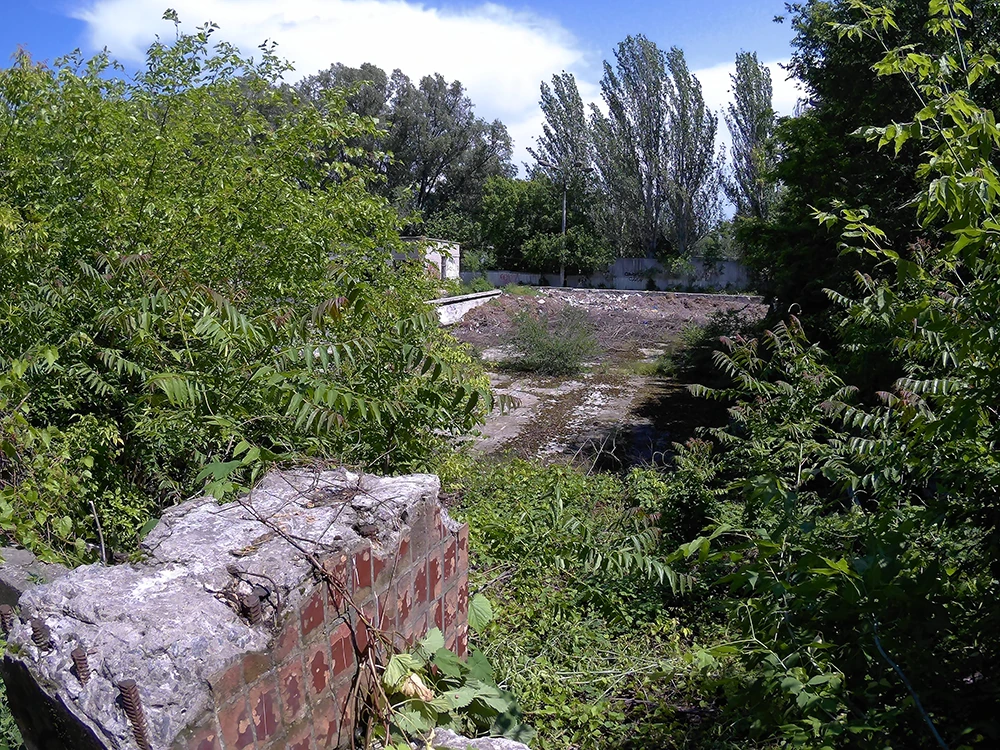
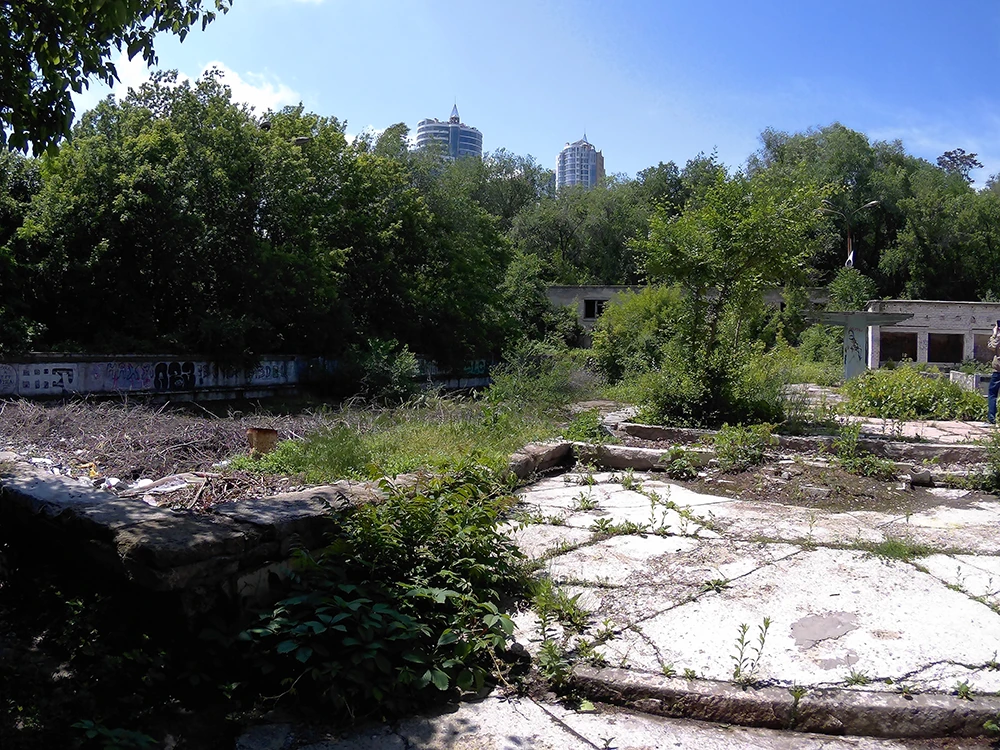
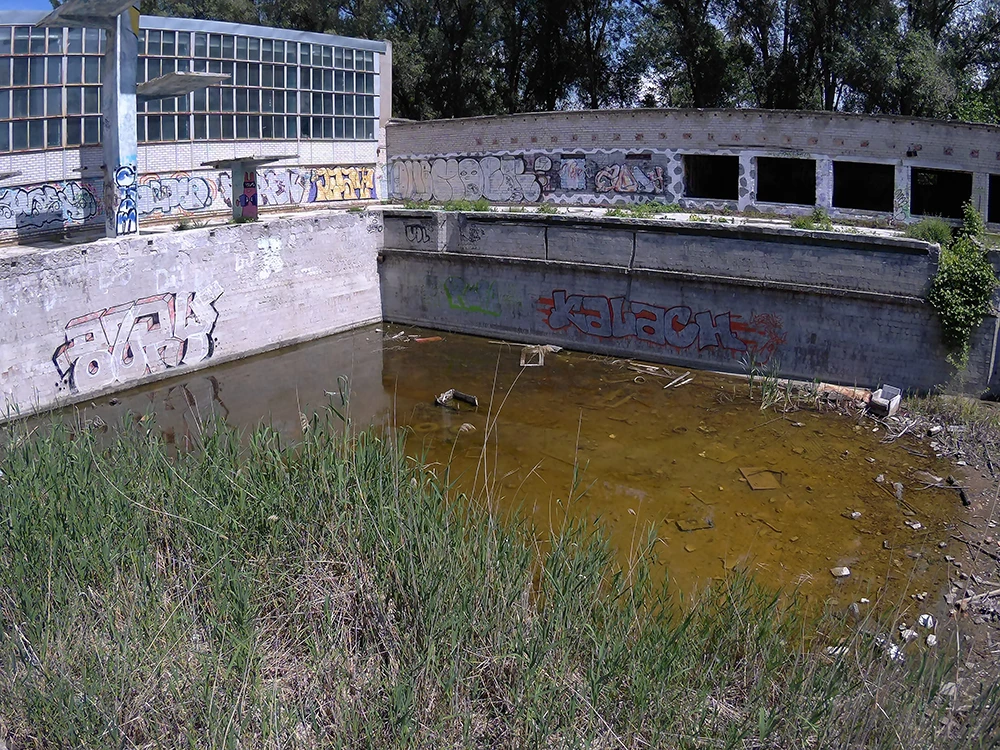
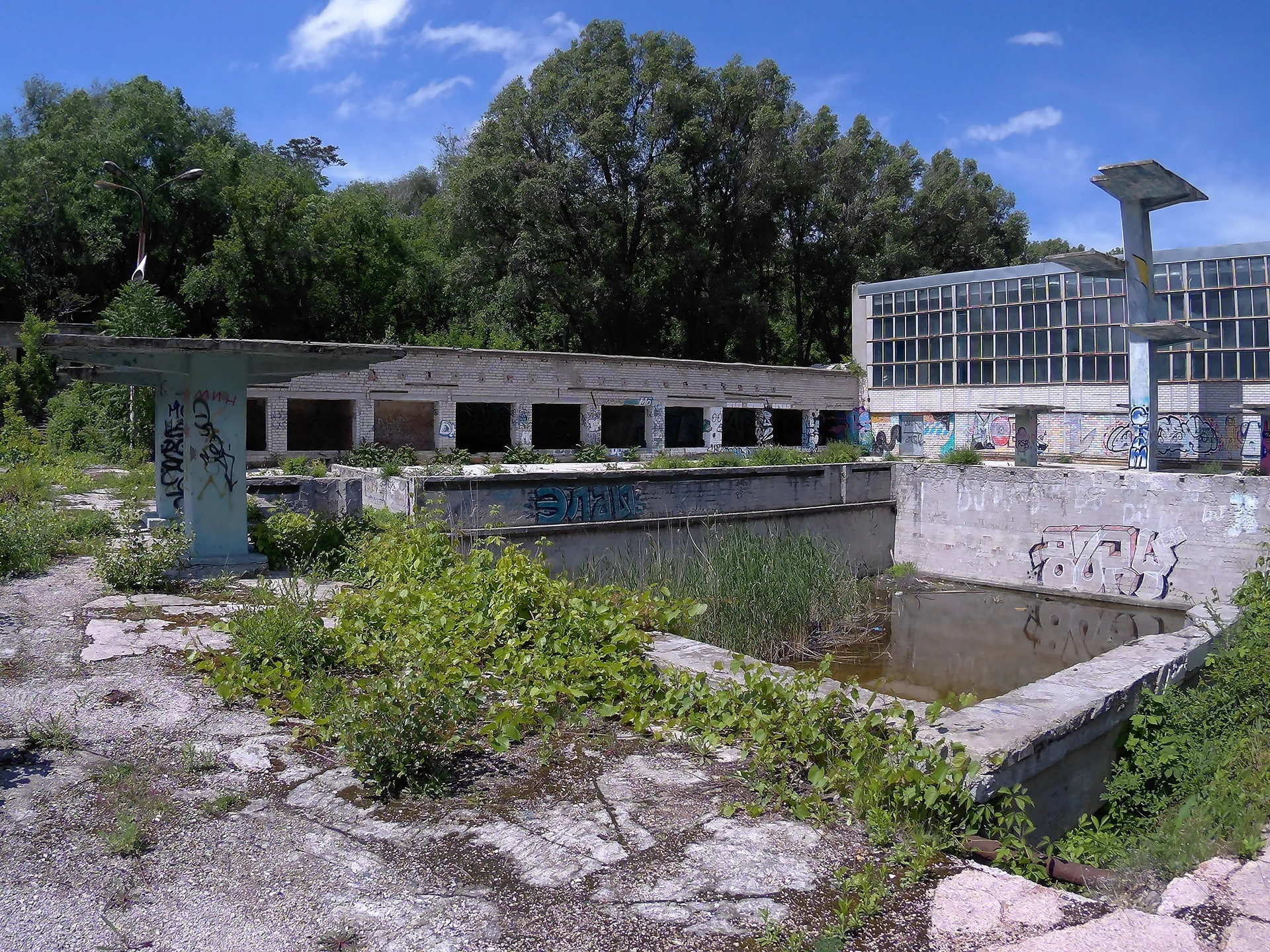
At first glance, it is difficult to understand that this was once a full-fledged sports complex. Today, the site consists of two huge concrete pits surrounded by abandoned buildings and the remains of structures. But if you look closely, it becomes clear that these are two outdoor swimming pools: one deep, designed for diving, and the other for swimming, with lanes for training and competitions.

View of abandoned outdoor swimming pools
View of abandoned swimming pools from a different angle
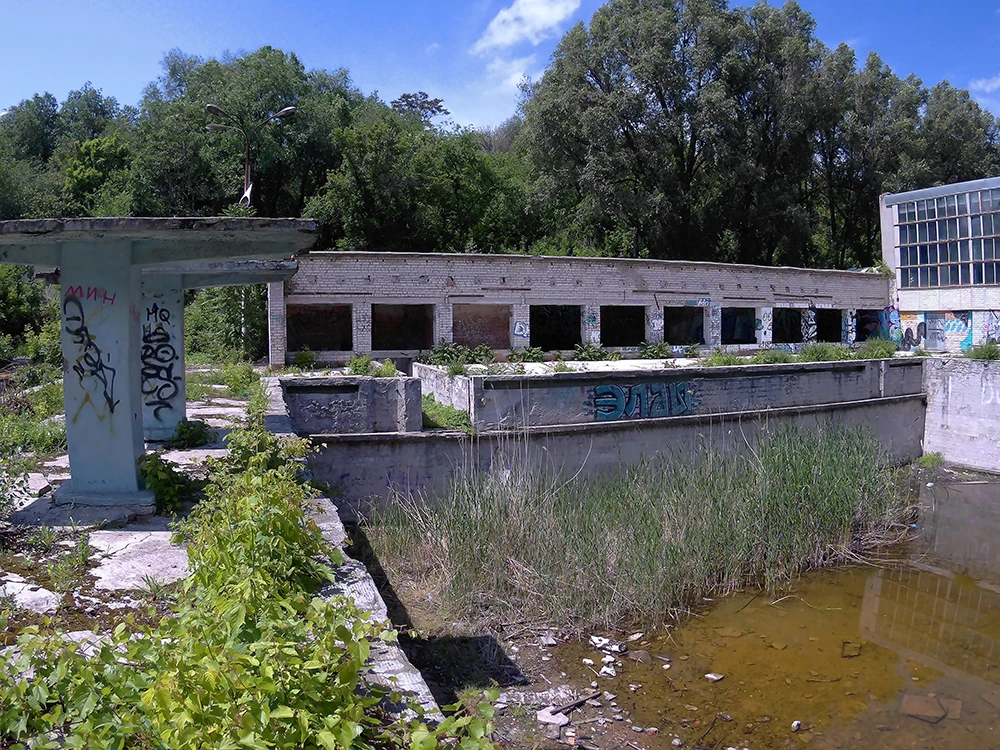
Вид на плавательный бассейн
View of the swimming pool
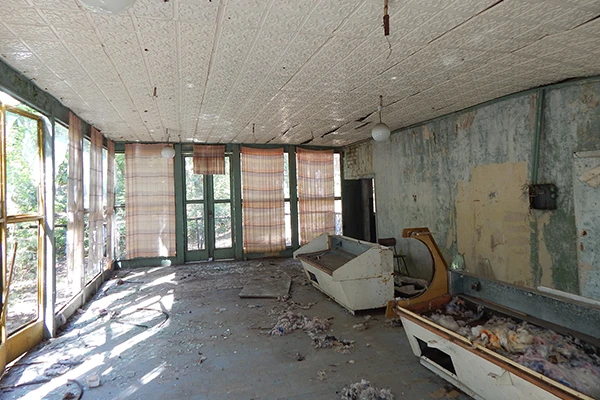
One of the changing rooms

Historical background

According to local history publications, the pool was commissioned in the mid-1970s, presumably for the 200th anniversary of Dnipropetrovsk. In those years, such facilities were built with a view to long-term operation: sport was seen as an important part of the city’s infrastructure, and such facilities became training centers for athletes. The complex had its own boiler room and a developed communications system, thanks to which the pool could operate all year round — a rarity even by the standards of large Soviet cities.

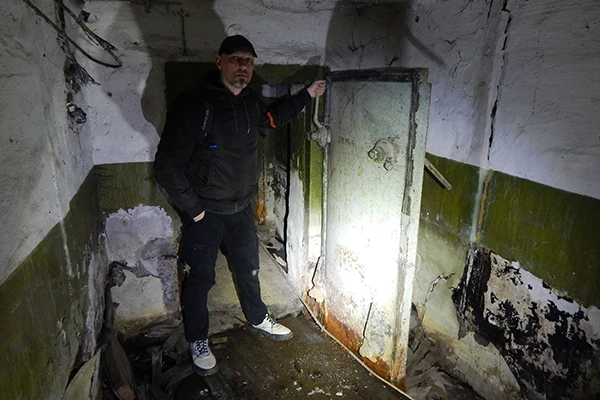
On the side of the diving pool, there were rooms that served as changing rooms and auxiliary areas. These rooms made it possible to use the complex all year round: in winter, athletes could change in a warm room, enter the water, and swim through a special underwater passage to the main swimming pool without going out into the cold air. This system looked unusual, but for sports facilities of that time, it was a well-thought-out engineering solution designed for regular training at any time of the year. It was this feature that made it famous.

In the 1980s, the pool became one of the city’s main water sports venues. Students from the Institute of Physical Education trained here, and training camps and competitions were held here. The 1987 USSR Swimming Championships, which were held in this outdoor pool, are regularly mentioned in the city’s memoirs. For Dnipropetrovsk, this was a major event — only facilities that met high sporting standards were allowed to host such competitions.

This place is also associated with Vladimir Salnikov, the legendary Soviet swimmer, four-time Olympic champion, and one of the most famous athletes of his time. According to memoirs and publications, he competed or trained here during competitions and training camps. Even if it is difficult to reconstruct every detail today, the very fact that athletes of such caliber were present here speaks volumes about the status of the pool, much more than any official description.

In those years, the place was constantly alive. Morning training sessions were followed by daytime classes for students, and in the evening there were clubs and training sessions for athletes. The stands were filled with spectators, and the space around the pools was perceived as a natural part of student life. It was not a separate facility, but an extension of the institute — a place where sport existed on a daily basis.
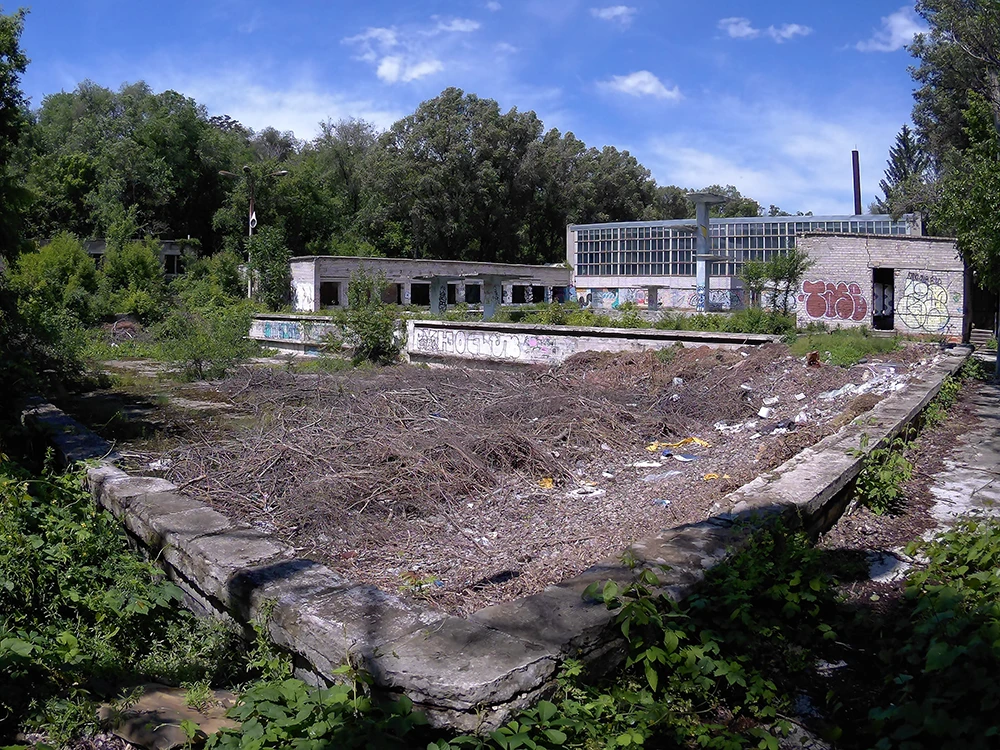
A garbage pit forms in place of the pool
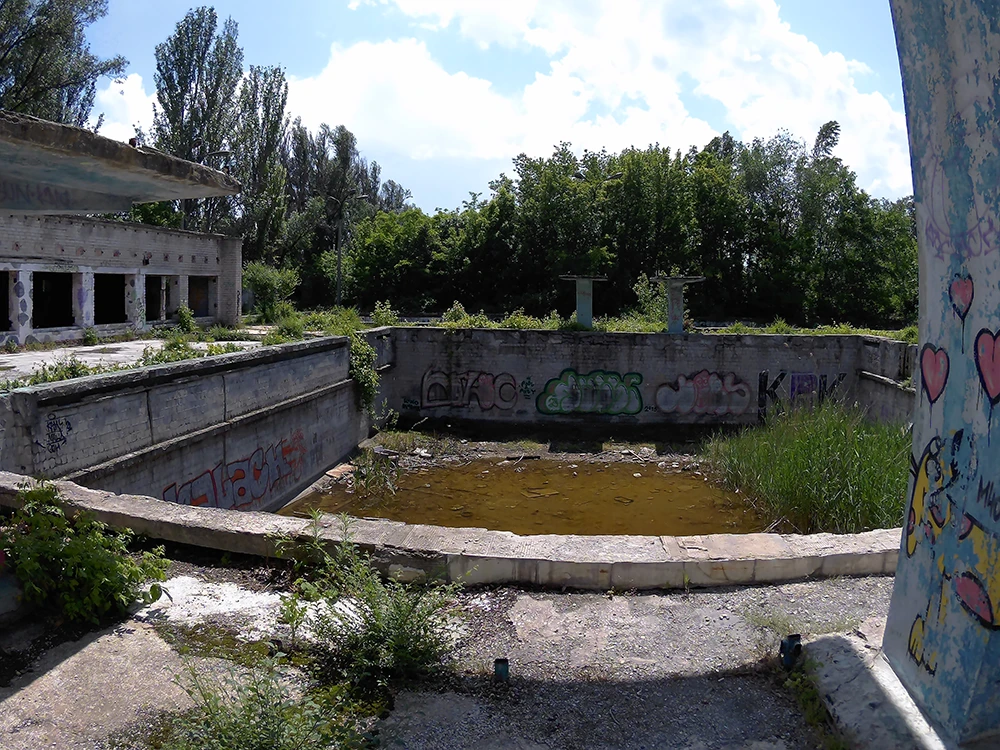
A green puddle at the bottom of the pool

The history of the complex ended unexpectedly and rather prosaically. In 1991, severe frosts put the water supply system out of order. The engineering communications were damaged, operation became impossible, and repairs required serious investment. The timing was unfortunate: the country was changing, funding was disappearing, and restoration was constantly postponed. At first, the pool was closed temporarily, with the intention of returning to the issue later, but later never came.

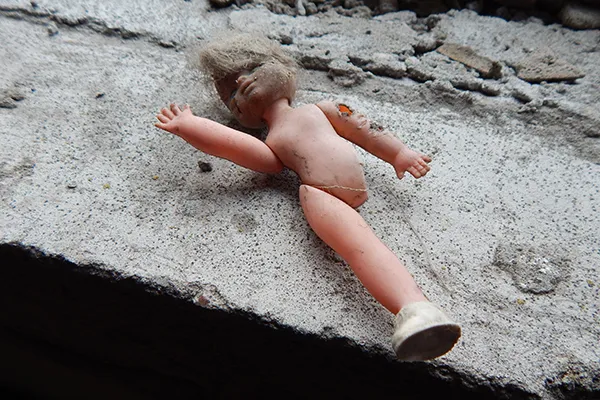
Since then, the place has gradually changed on its own. The tiles have disappeared, the buildings have fallen into ruin, the metal has been dismantled, and the space has begun to fill with wind, grass, and random traces of human presence. Water sometimes collects in one of the pools, turning the former sports facility into a small pond where ducks can be seen. The high diving towers still rise above the emptiness and look almost unreal — a reminder of a time when there was depth, noise, and movement here.

Technical specifications of the complex's swimming pools

Diving pool:

  • Approximate dimensions of the pool: approximately 25 × 10 meters;
  • Depth: approximately 4–5 meters;
  • Equipped with diving platforms and springboards of various heights;
  • Approximate water volume: approximately 1,100–1,200 m³ (more than 1 million liters).

Swimming pool:

  • length — 50 meters (Olympic standard);
  • width — approximately 21–25 meters;
  • several swimming lanes for training and competitions;
  • average depth — 1.8–2.2 meters;
  • approximate water volume — approximately 2,500 m³ (approximately 2.5 million liters).

I recommend reading