Abandoned bomb shelter near the 9th hospital in the city of Dnipro
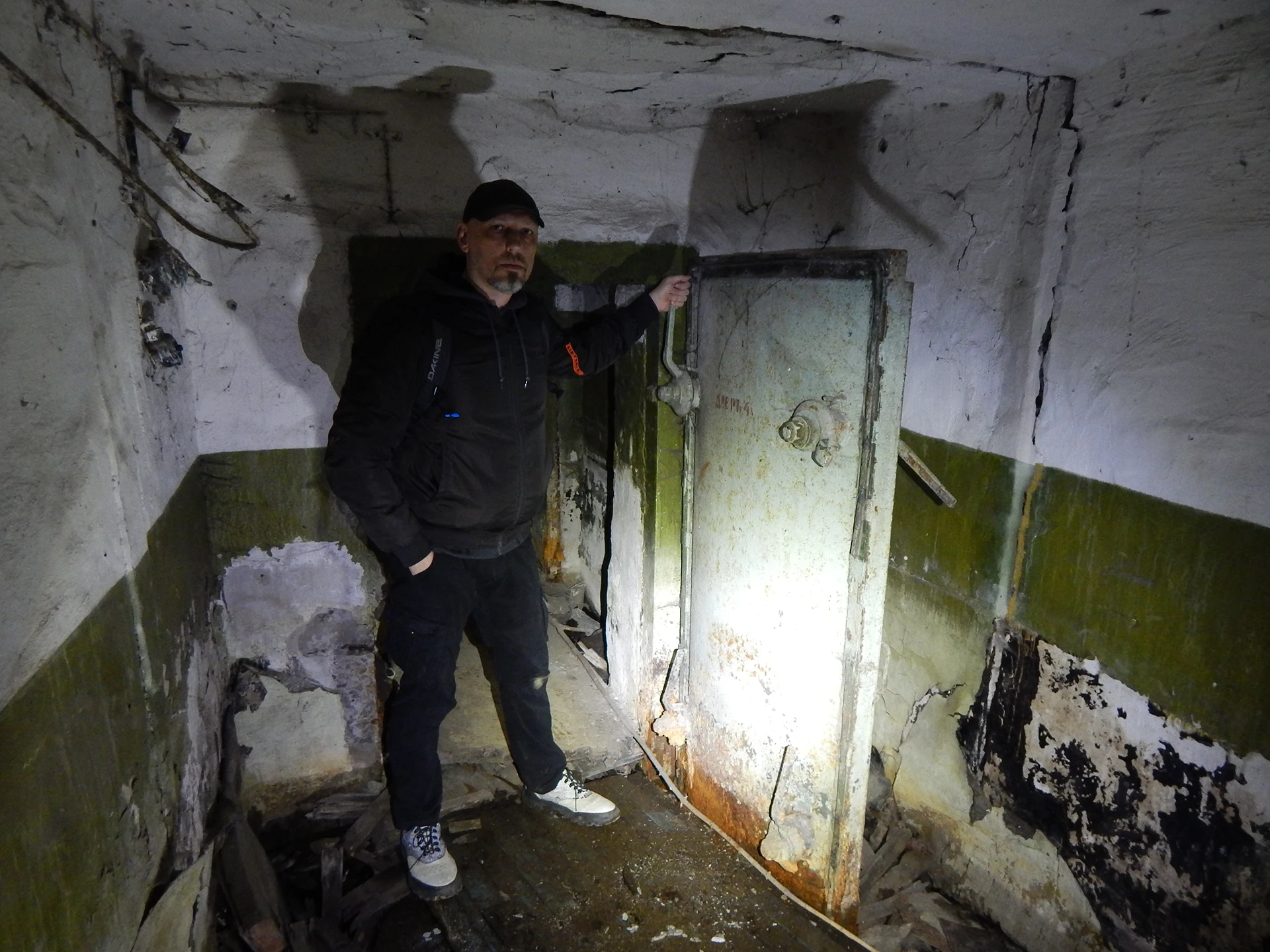
Several years ago, long before the start of hostilities, one of the random objects for research was an old bomb shelter on the territory of City Hospital No. 9 in Dnipro. Years earlier, before my visit with Den Weissman, it had been mothballed, and the key to this hiding place was carefully kept by the chief physician of this medical institution, at least so it seemed to me. Even then, I imagined a basement filled with various medical supplies, medicines, gas masks, and other special instruments, which indicated that this was not just a bomb shelter, but a real underground hospital.
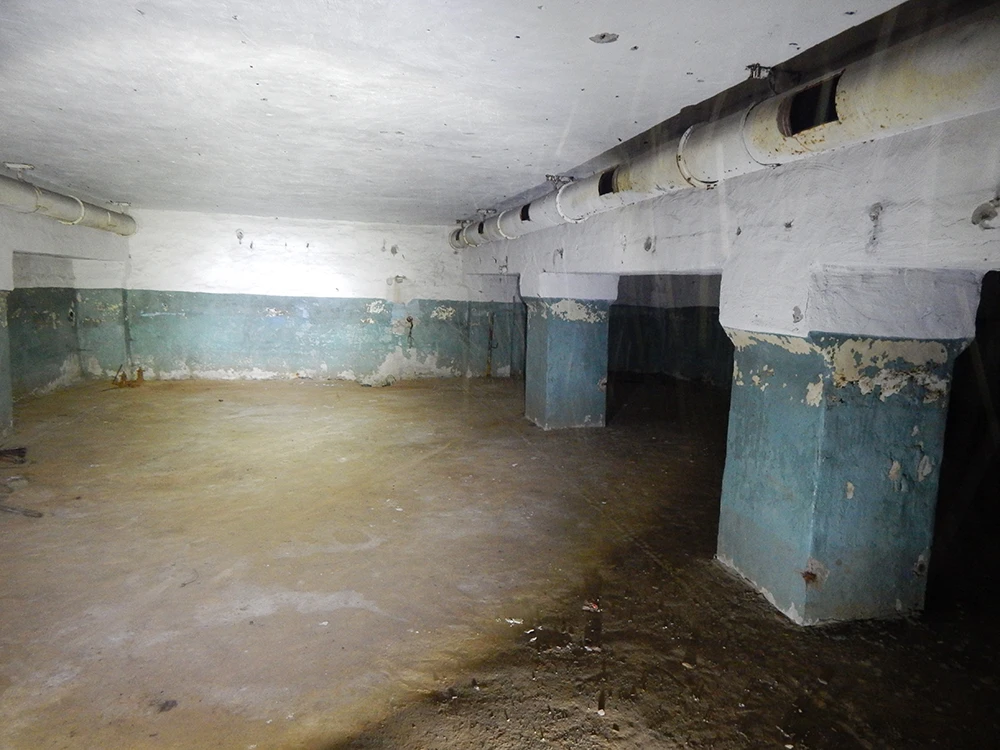
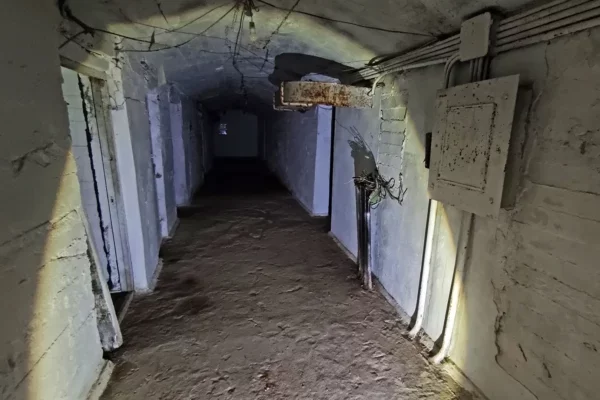
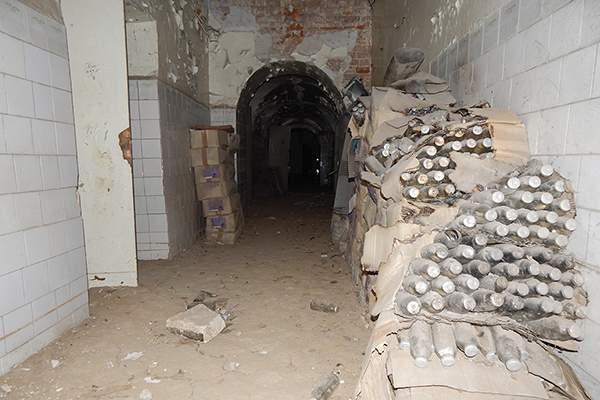
All notions about this bunker quickly dissipated, especially after it became open and accessible to the public. The first thing that struck me and immediately caught my eye was the complete emptiness and absence of anything inside. Apart from various rubbish and remnants of things that were neither needed on the farm nor suitable for scrap metal, there was practically nothing there.
There were, of course, a couple of benches and a large water tank — so massive that it was impossible to move it to the right or left. It was already covered with rust — apparently, they simply couldn’t pull it out.
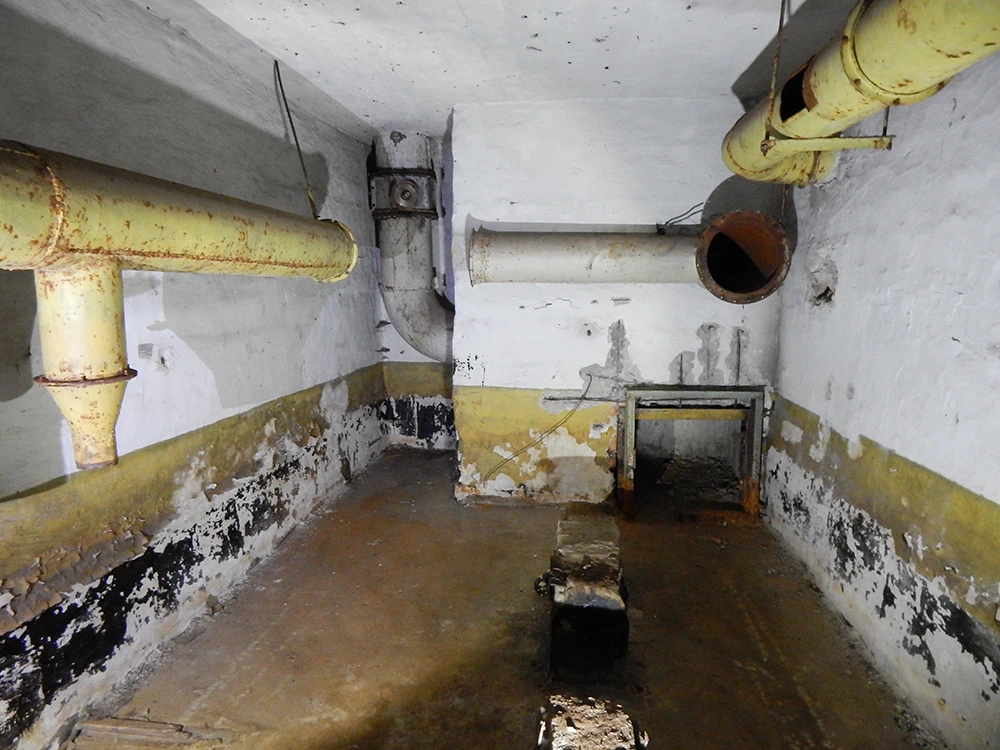
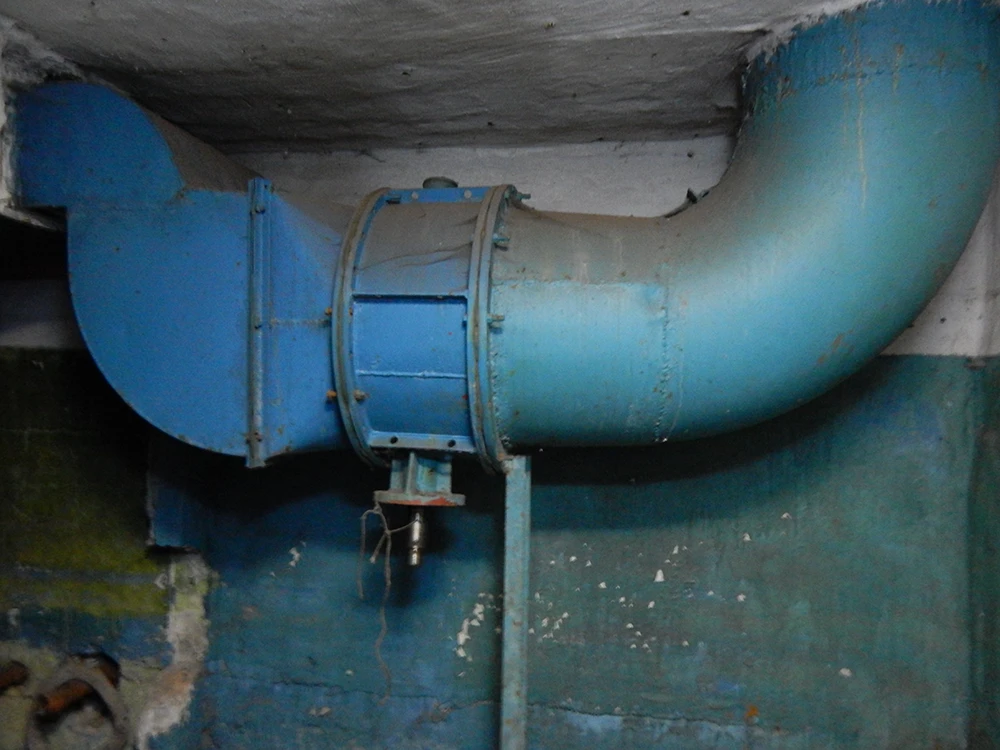
However, there were some things worth paying attention to. For example, in the ventilation section, even in a separate ventilation room, there were still some fully functional mechanisms. These could have been various dampers or pipe elements. In general, some of the mechanisms were in fairly good condition: they were lubricated and worked well — they were easy to interact with.
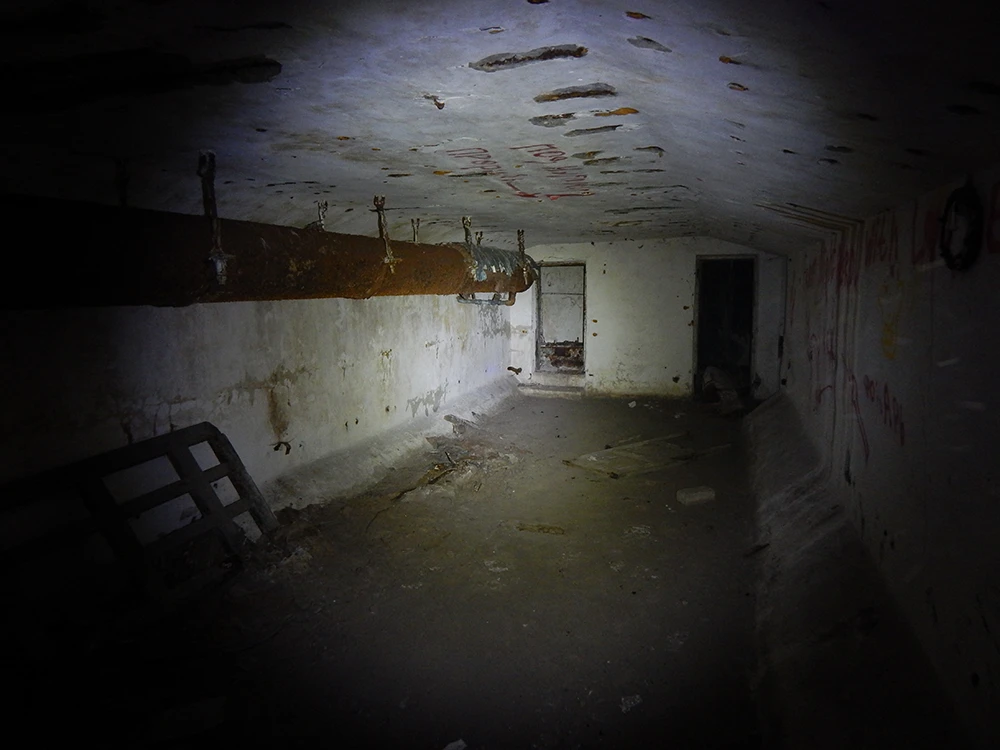
Main hall of the bomb shelter
Ventilation chamber of a bomb shelter
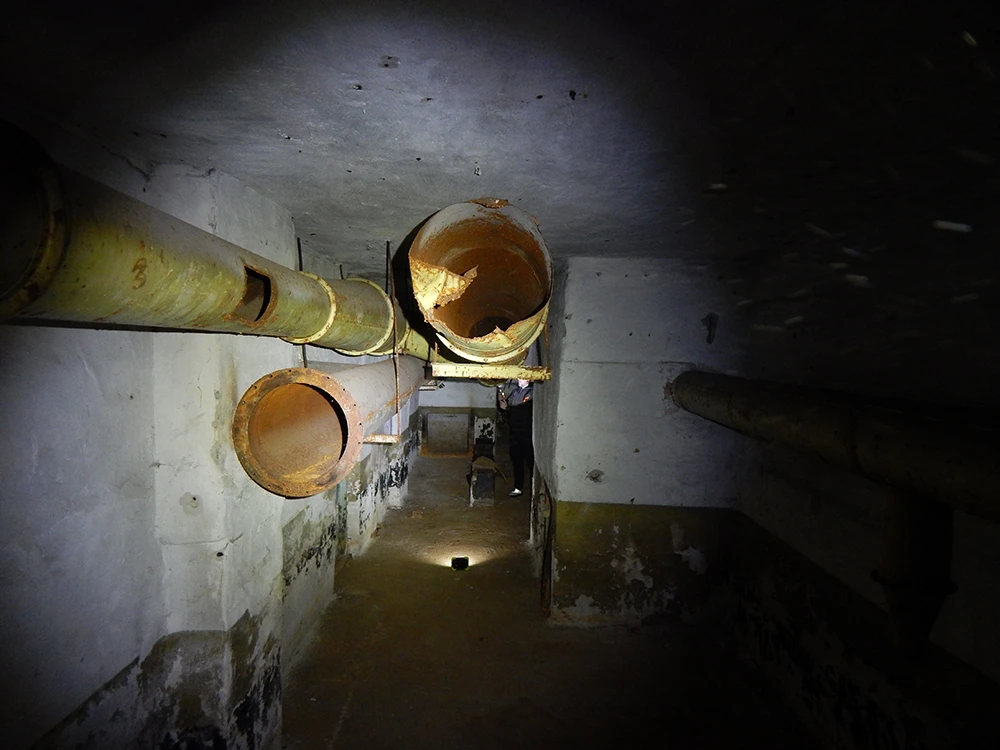
Old ventilation ducts of the bomb shelter
Ventilation pipe
Not one, but two bomb shelters
The hill on the hospital grounds initially gave the impression that there was a single bomb shelter underneath it, but upon closer inspection, it became clear that there were not one, but two abandoned civil defense shelters. Both structures are located next to each other on the hospital grounds and have long been written off the civil defense balance sheet. The condition of their structures can be described as satisfactory, although most of the equipment has already been dismantled.
One shelter was larger, the other smaller, and each had its own entrances: two entrances with vestibules for each structure.
The first facility is a small shelter designed to accommodate approximately 75–100 people. It was built according to one of the standard designs for prefabricated structures from the late 1950s and early 1960s. Inside, there are two sections for sheltering people, two bathrooms (located in one of the sections), and two small technical rooms—a ventilation unit and a filter ventilation chamber.
The second facility is significantly larger. It is a medium-capacity shelter, designed for approximately 200 people, built in the early 1970s using prefabricated reinforced concrete structures. Inside, there is a common hall for those seeking shelter, two bathrooms with a washing area, and a large technical room for two filter ventilation systems, connected to two air intake ventilation shafts and emergency hatches. There is also a small generator room and a storage room.
During the period of so-called “conservation,” the shelters were not actually mothballed — they were simply used as underground storage facilities for the needs of the hospital on whose grounds they are located.
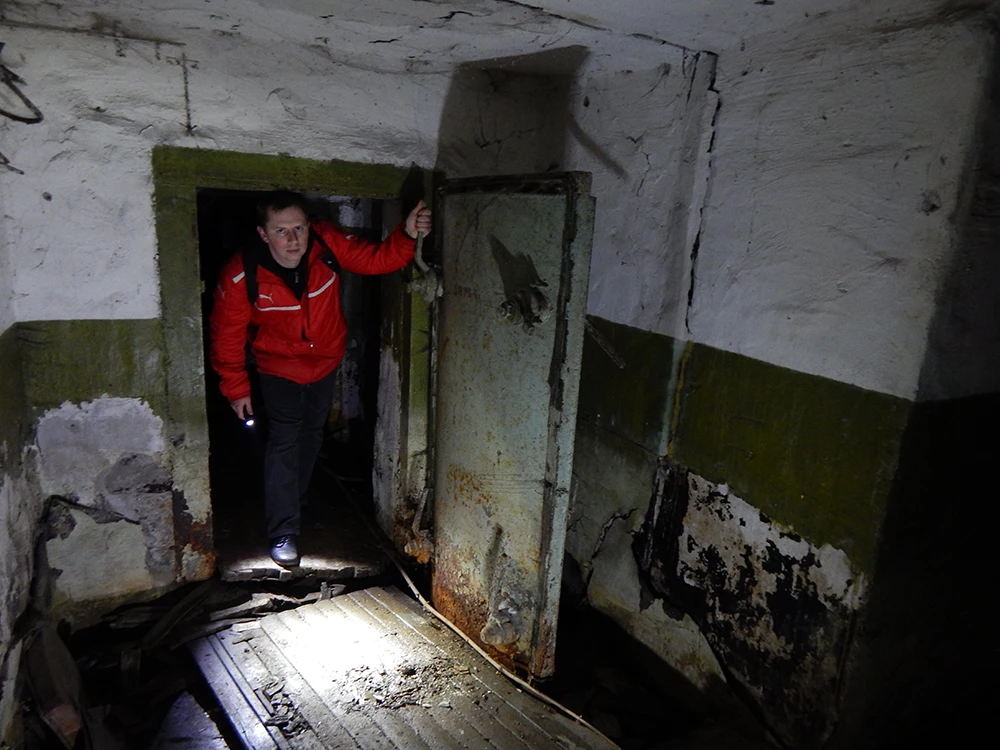
One of the entrances to the bomb shelter
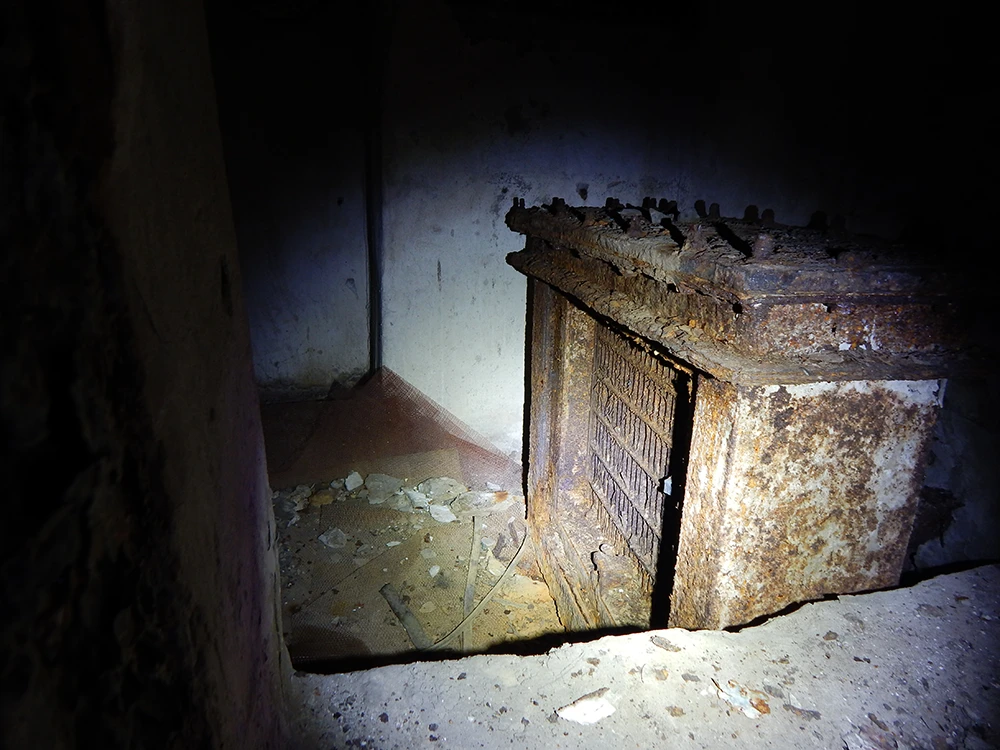
Oil air filter
Rusty water tank
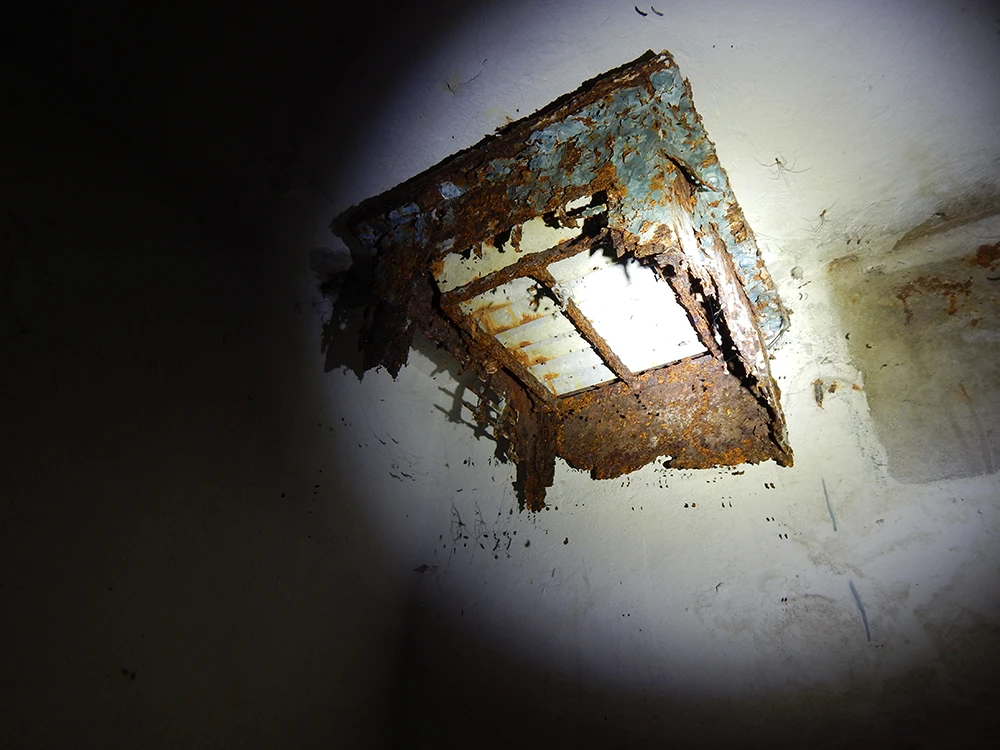
Completely rotten air filter
What's inside the shelters and how they work
The shelters themselves turned out to be quite simple in nature. No complex technological solutions or sophisticated technical facilities were provided for here. Everything was designed to be as functional as possible: a bathroom, a ventilation shaft, a small technical room, and a main hall for accommodating people. Inside, there were several water tanks, a toilet, and a space where people could simply sit and wait for whatever was happening above to pass.
It seems that these are not long-term protective structures, but rather shelters for short-term stays — for a few hours, a day at most. They are not designed for autonomous living, but for temporary isolation in case of an emergency.
At the same time, the individual preserved elements are truly impressive. The thickness of the metal used in the ventilation pipes and air ducts is particularly striking — the walls are approximately one and a half centimeters thick. Even after decades, the metal looks solid and reliable. Many pipes are still covered with technical grease, which indicates that the equipment was once serviced and maintained in working order.
Overall, these are typical, simple structures of their time — without excessive technical complexity, but designed for durability and basic protection.