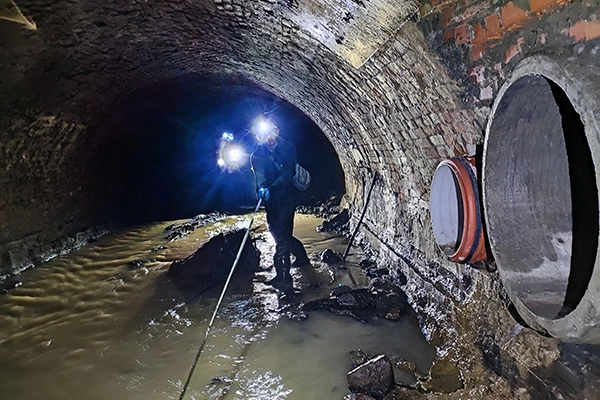
A year ago, as part of a team of diggers, we attempted to completely traverse the Zaporizhzhia waterway collector, but we were prevented from doing so by a high-pressure water pipe rupture under Yavornytskyi Avenue. This time, my friend and I traversed almost the entire system, from the beginning to the old bed of the small Zhobokryach River (we did not go to the embankment).
The Zaporizhzhia watercourse originates from the storm drainage system in Zelenyi Hai Park, flows along the bottom of Klenova Balka (under Mykola Rudenko Street), then winds through the neighborhoods and flows into Voskresenska Street, then into the Dnieper River. Until the end of the 19th century, the Zaporizhzhia watercourse was a tributary of the Polovitsa River.
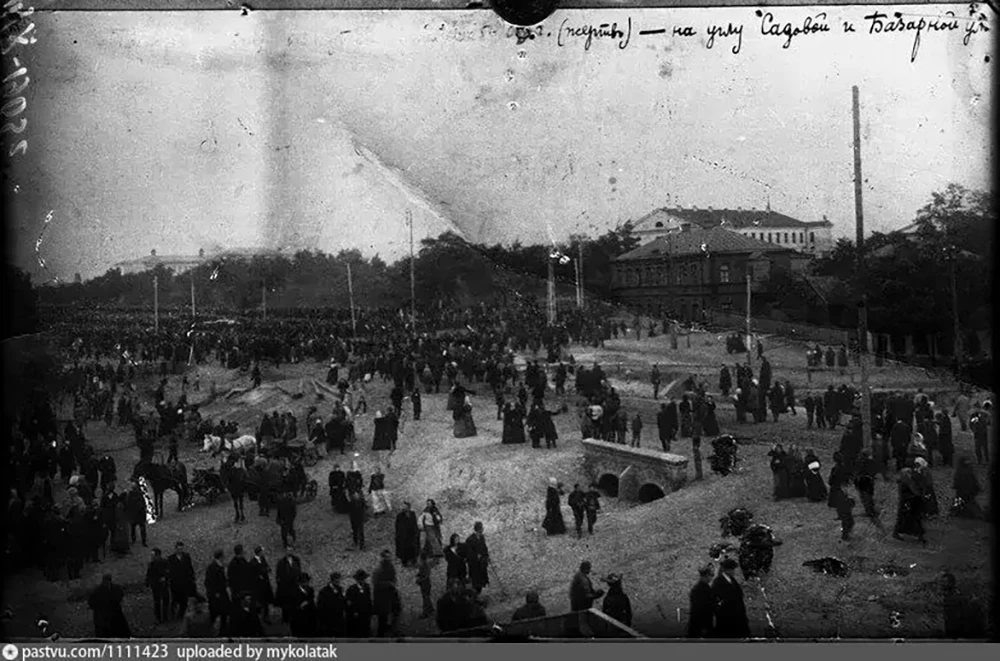
The Zaporizhzhia watercourse collector appeared in pieces. First, brick bridges and ditches were built, then the ditches began to be covered and collectors were built, filling in the space that had appeared on the surface. By the 1970s, the river had completely disappeared underground, additionally taking on the task of draining rainwater from storm drains.
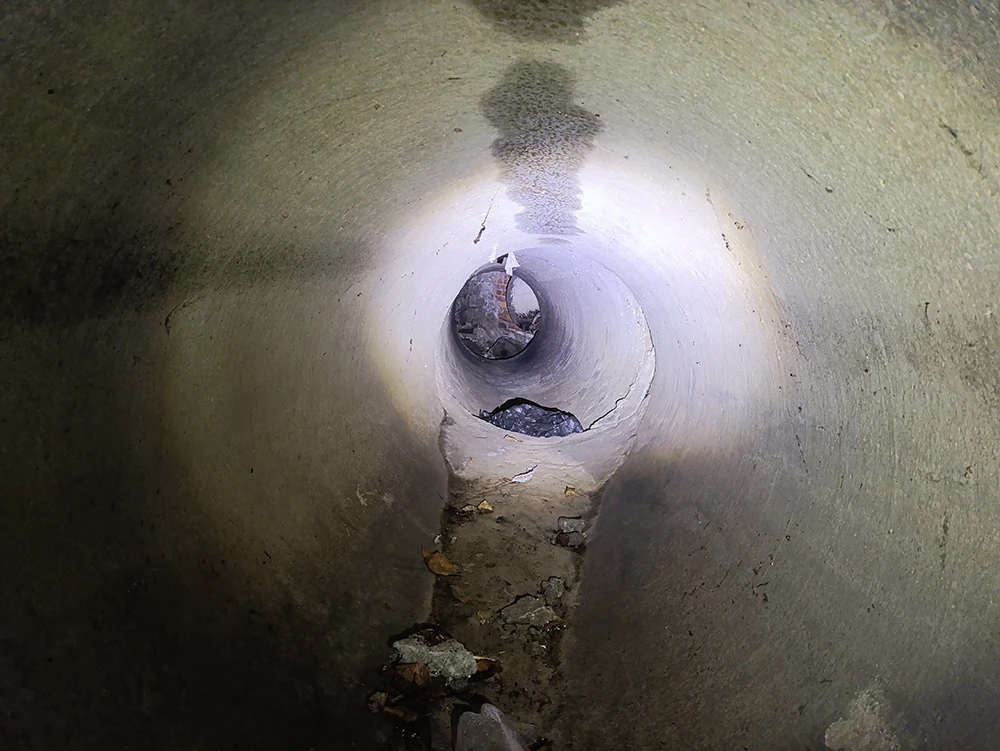
1. Inside the pipe, diameter 80 cm, the beginning of our journey
2. A pipe with a diameter of 1.2 meters. At this point, it seemed to me that we had reached the sewage system, as evidenced by the smell, the color of the water, and the sludge at the bottom of the pipe. A little further along the collector, we saw numerous sewage connections, which upset me greatly, because this is a storm drainage system
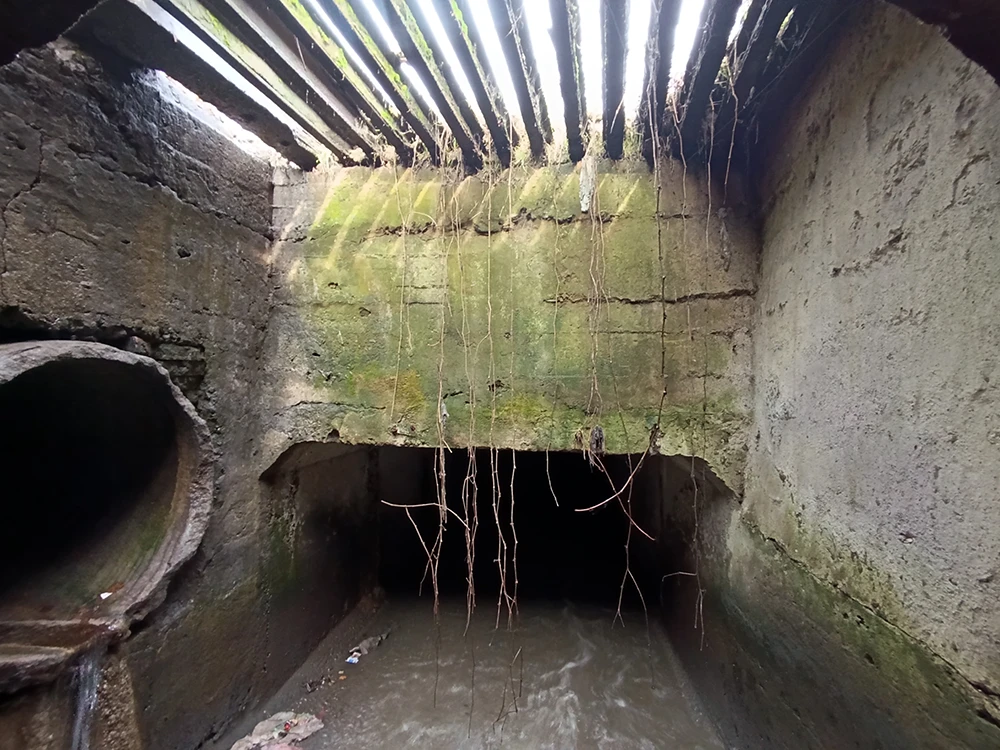
3. After walking 140 meters through the pipe, we came to a transition chamber, which acts as a large storm drain
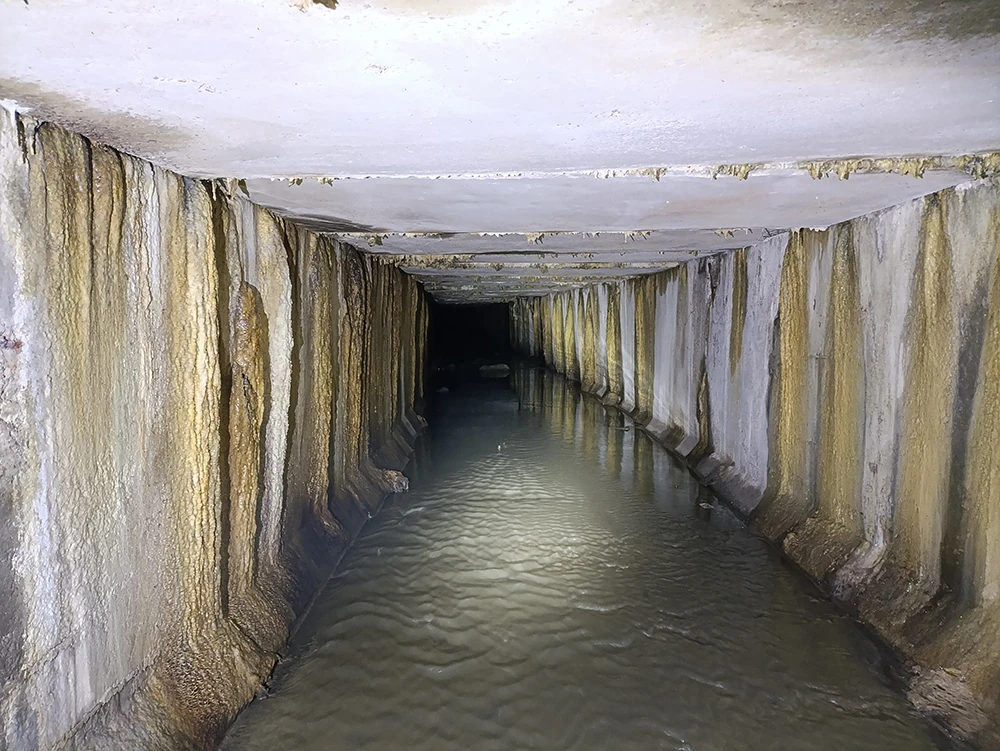
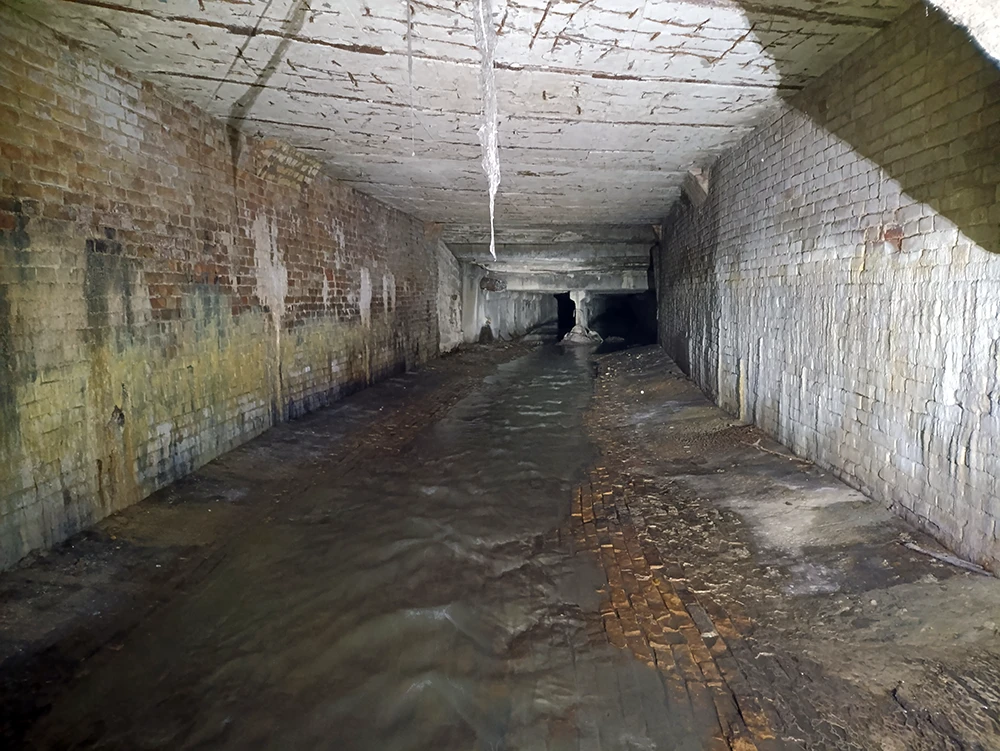
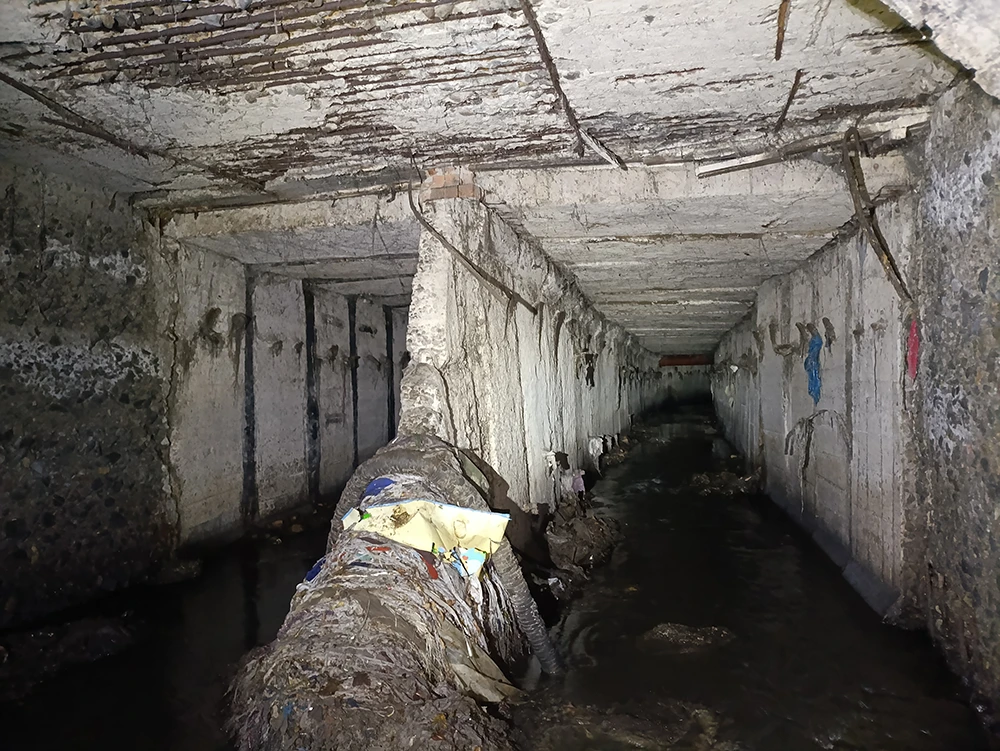
4. Next, we walked 1.7 km along a concrete box culvert, which was not the most interesting part of the journey. This section of the collector was built in the late 1960s
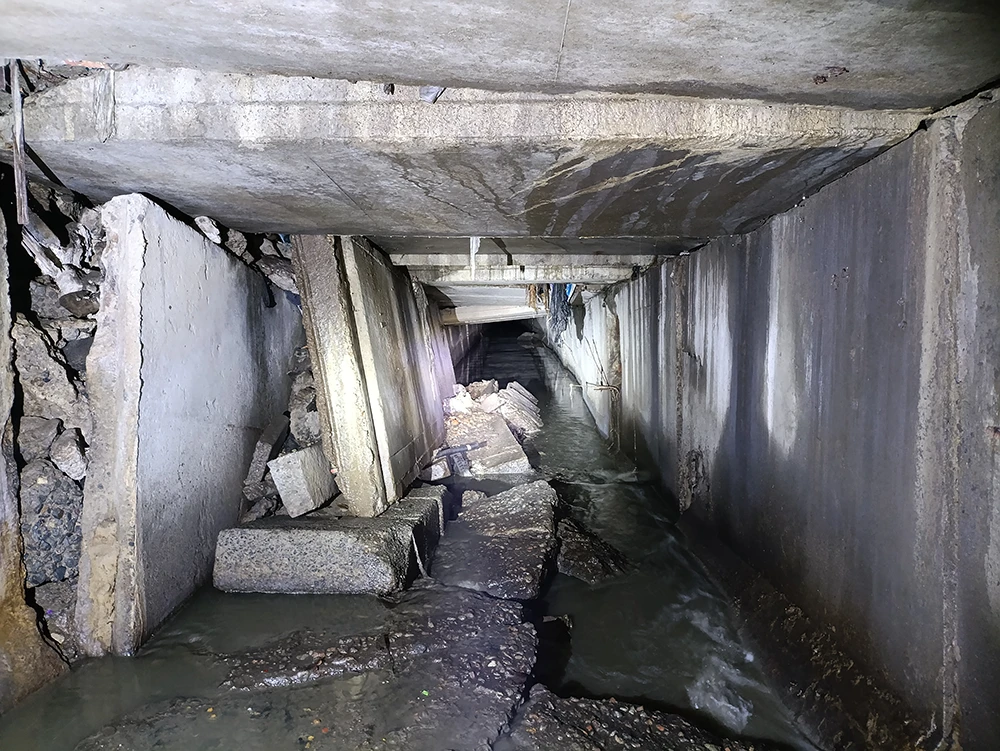
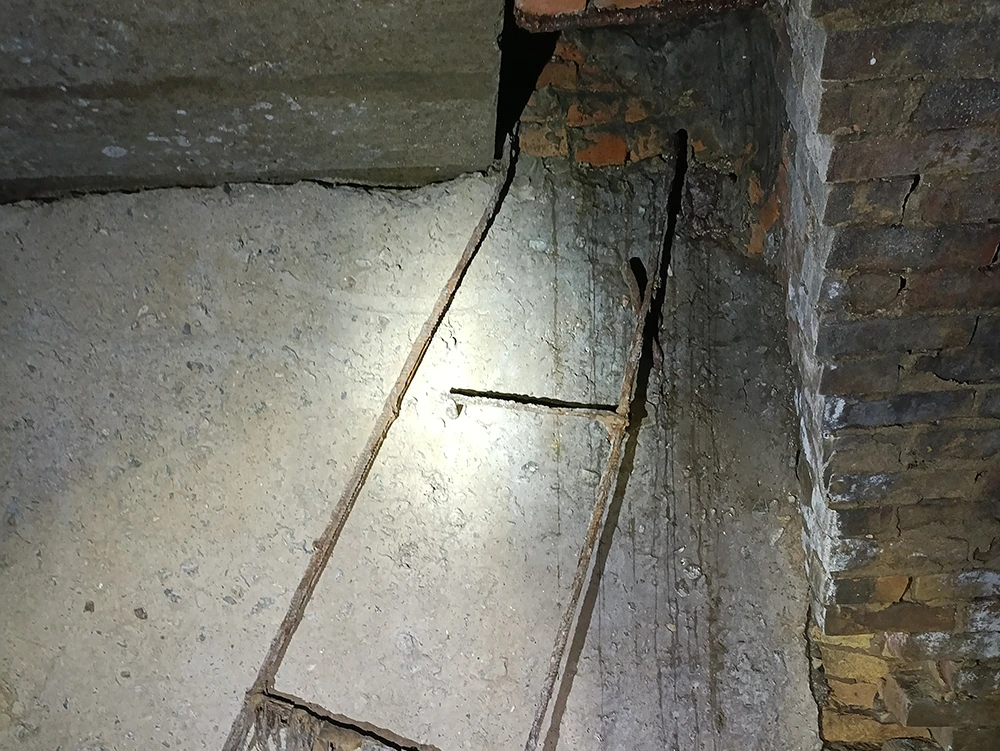
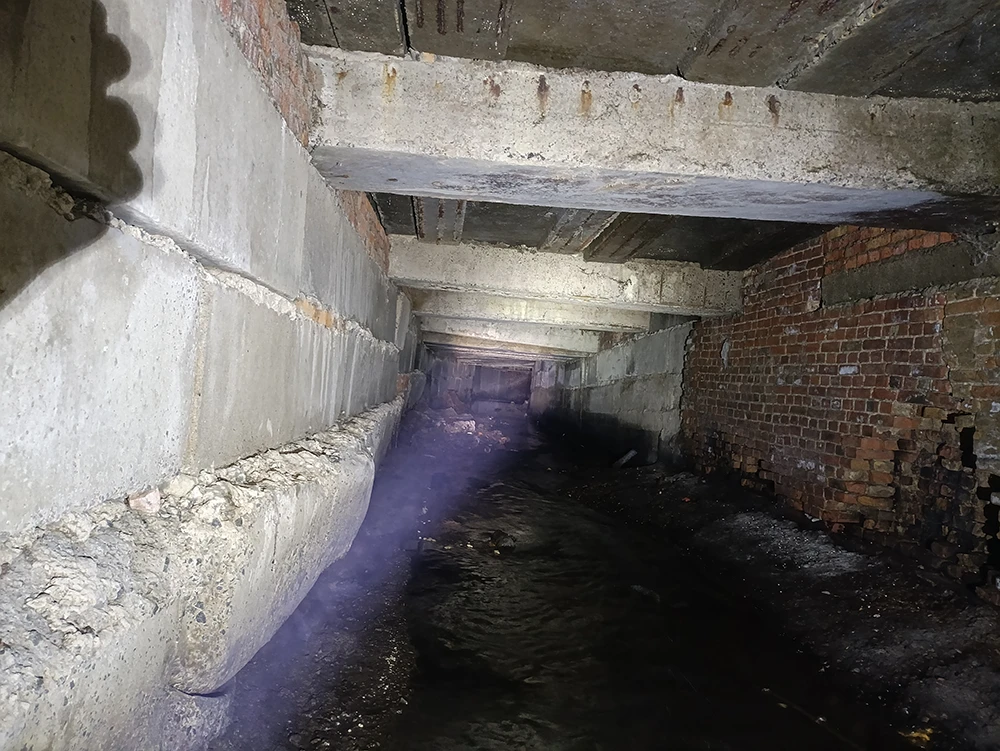
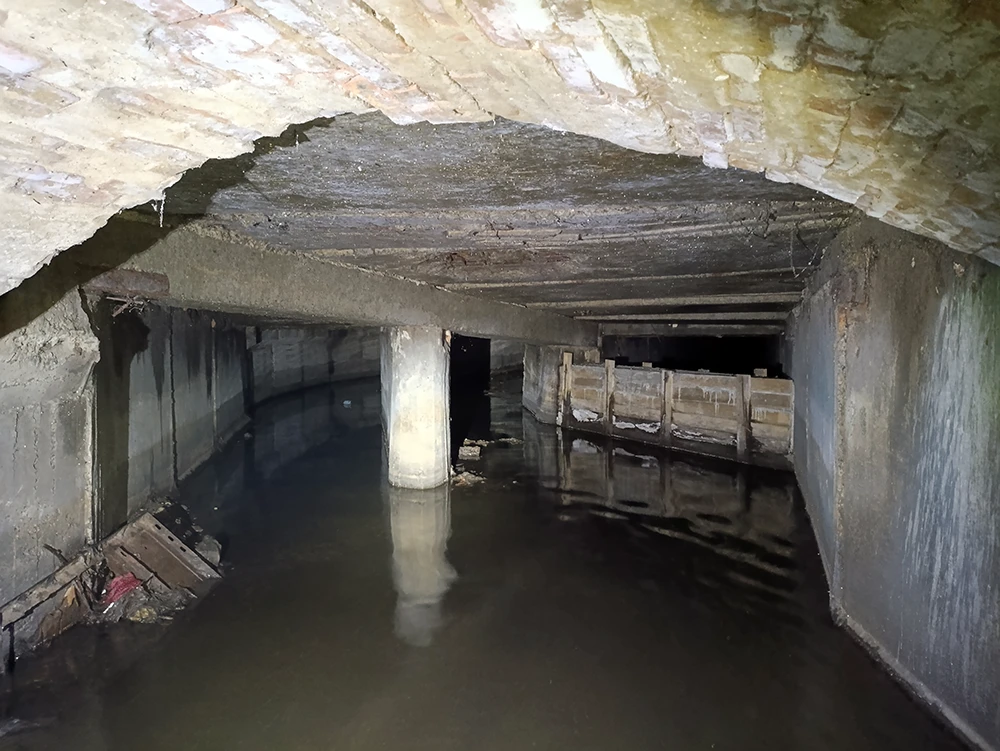
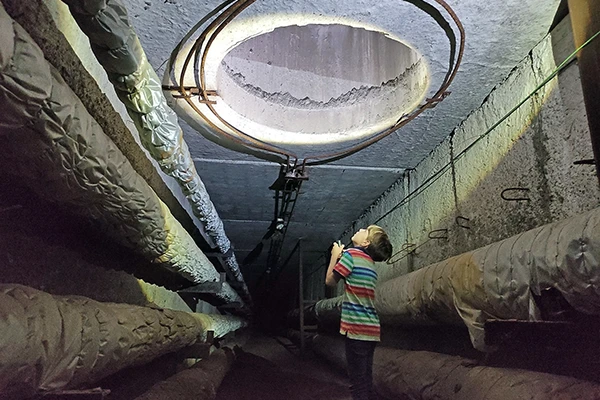
5. An emergency situation occurred when the ground near the collector was washed away, causing the left wall to start collapsing. The collector was dismantled and another concrete slab was added to prevent the ceiling from collapsing
6. A strange camera with a cutout. The reliability of the beam supporting the ceiling raises questions
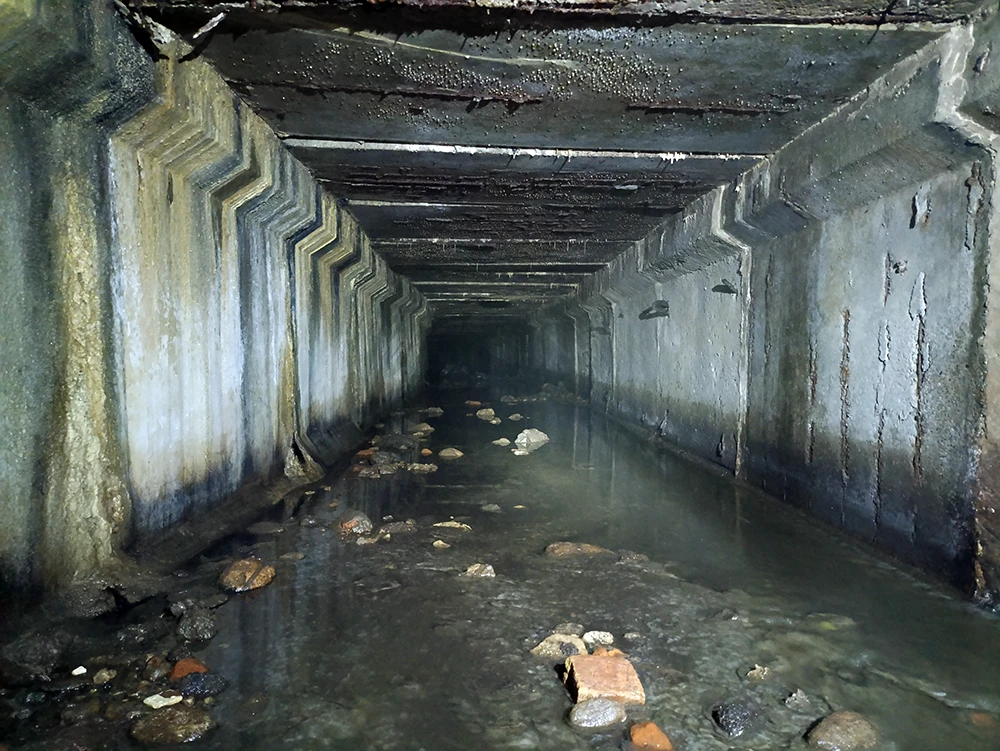
7. After about 2 kilometers, the collector split into two duplicates. This division is necessary to increase the throughput capacity and strength of the collector itself
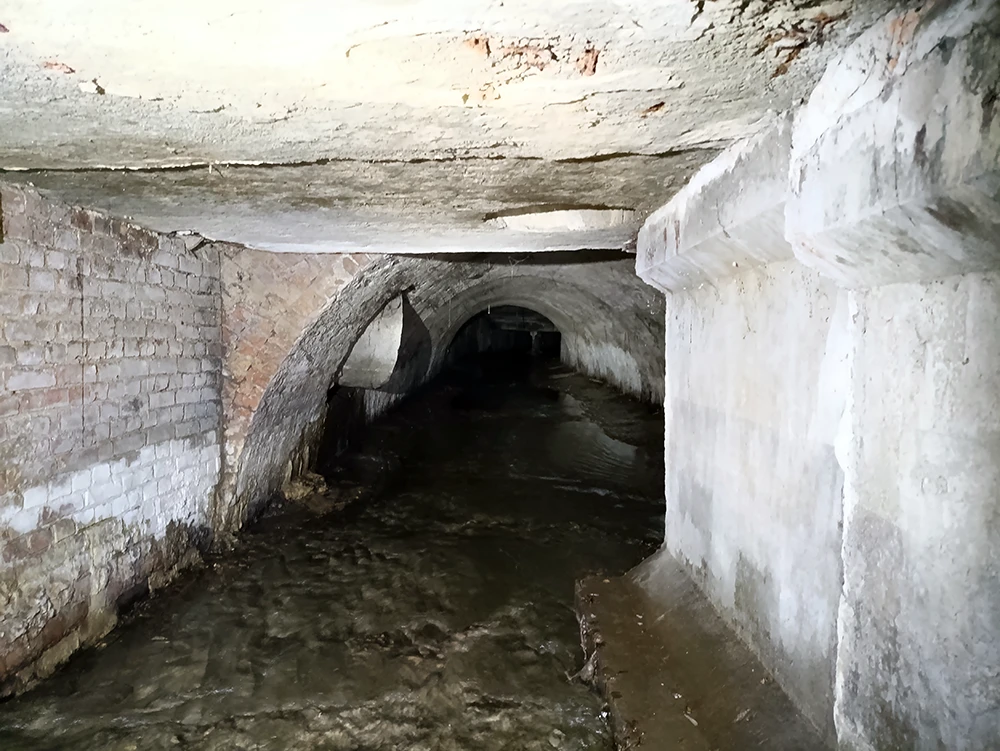
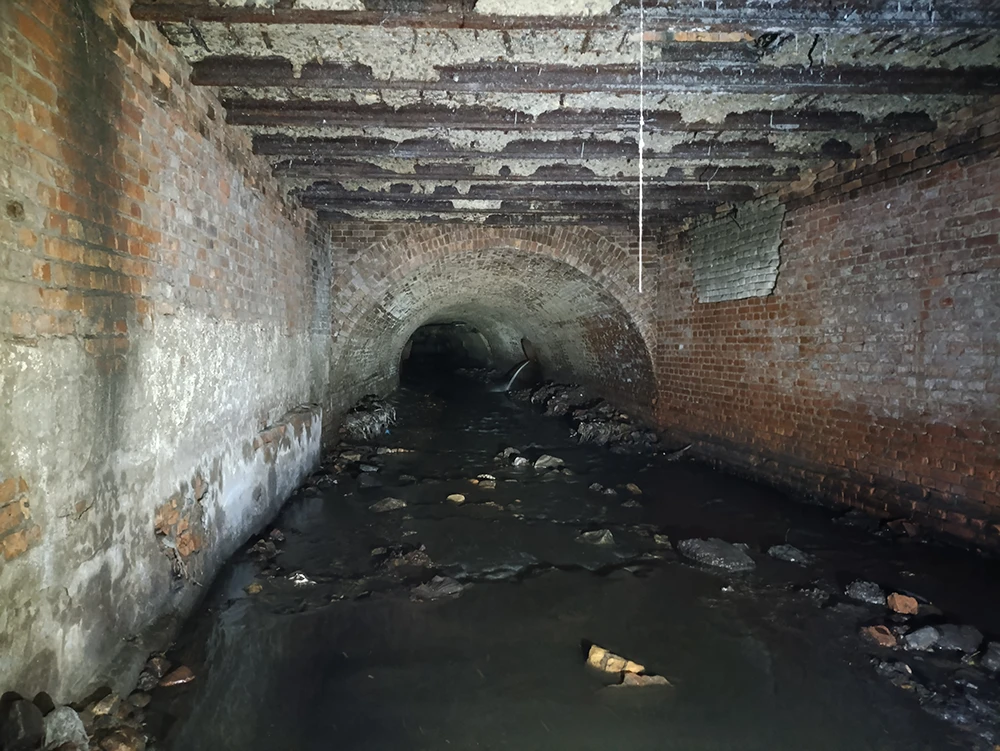
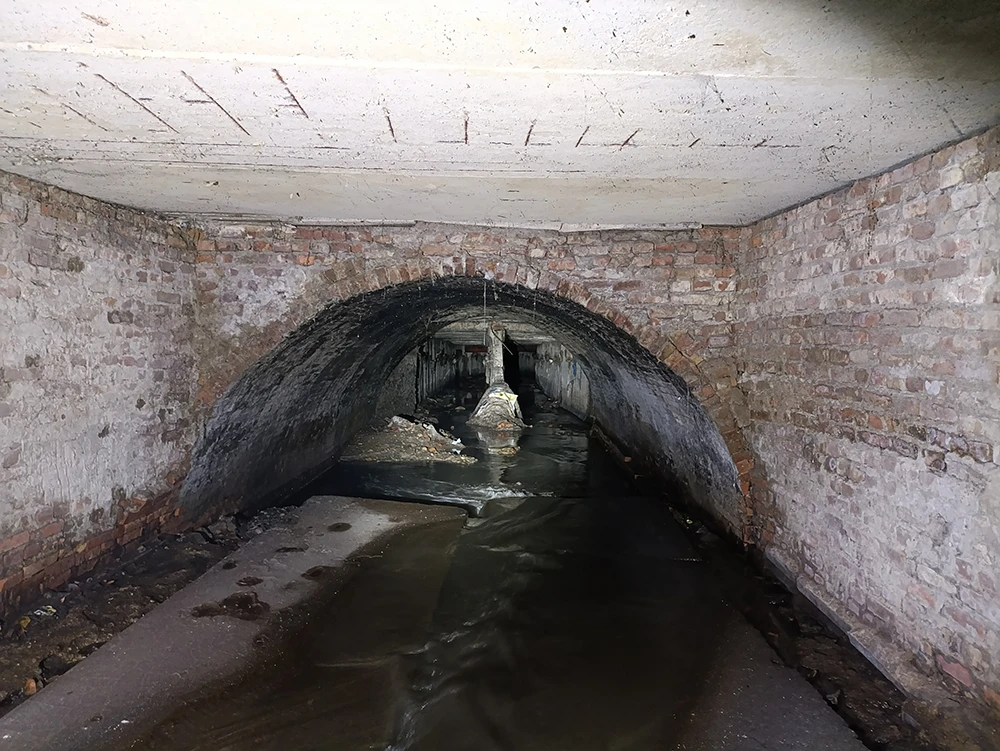
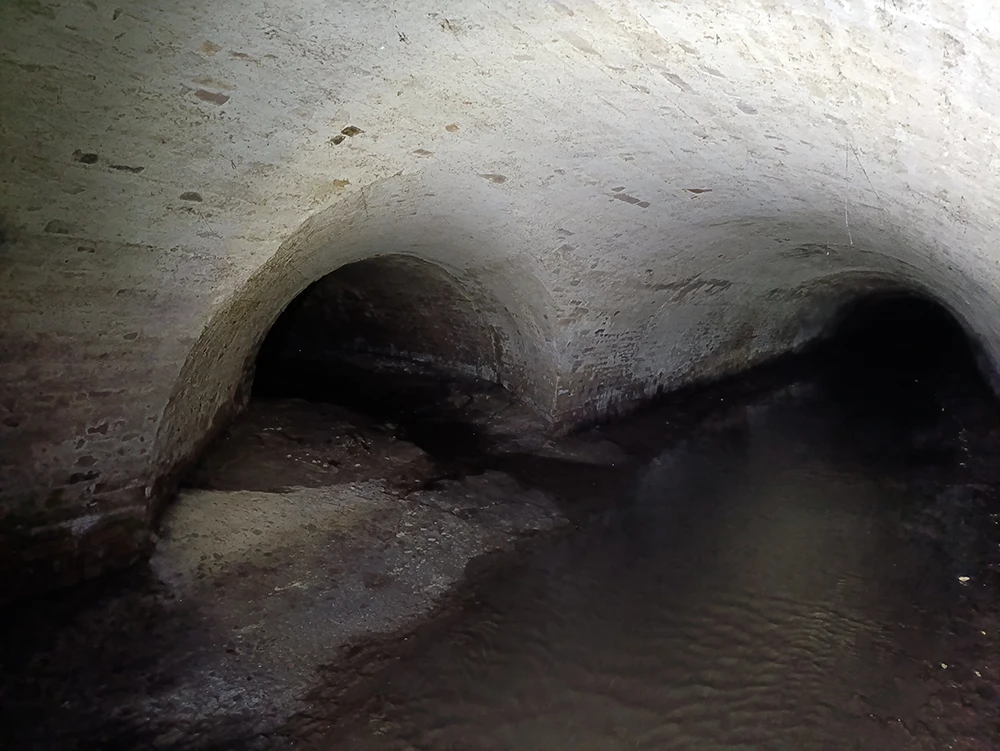
8. We reached the intersection of Nikolai Rudenko Street and Ulyanovskaya Street, the doubles ended, and we could see the underground bridge from the late 19th century. Almost all underground bridges in Dnipro appeared at the end of the 19th century
9. After the underground bridge, it was initially a ditch, which was covered with concrete slabs in the late 1970s
10. We approached the intersection of Vladimir Antonovich Street and Alexander Pol Avenue (photo taken against the flow of traffic)
11. Underground bridge on Vladimir Antonovich Street, late 19th century. Initially, these bridges were open, but as the city expanded, a sewer was built on both sides of the bridge, concealing it underground (photo taken against the flow)
12. The underground bridge on Polya Avenue and the ditch were covered with concrete slabs, which remained in place until the 1940s
13. Old connection from the rainwater collector
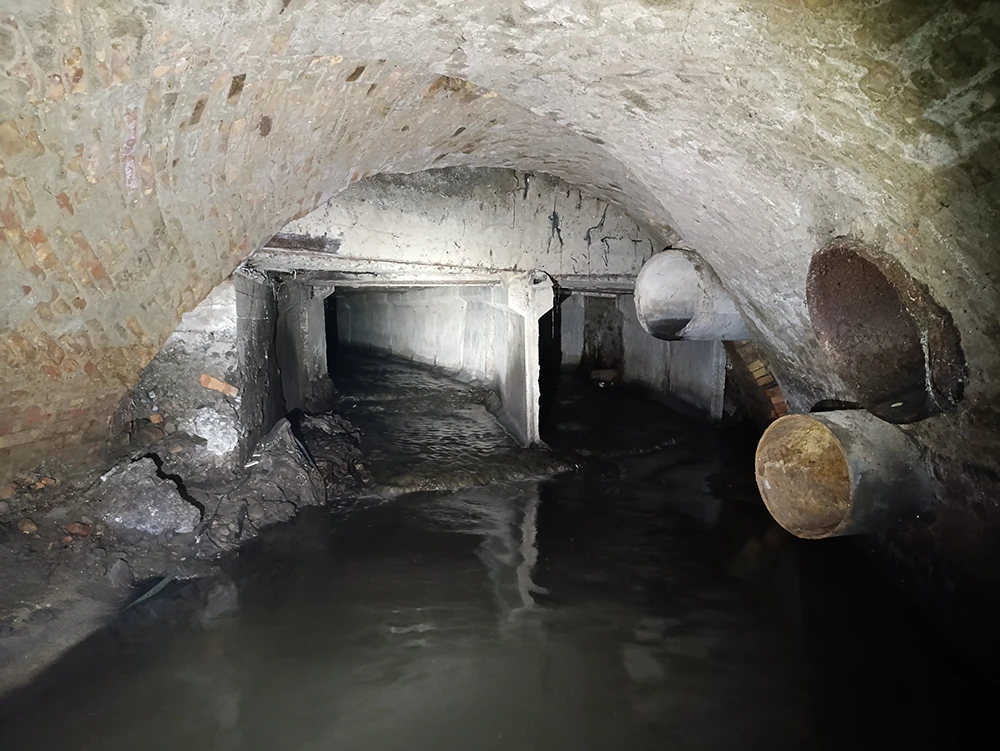
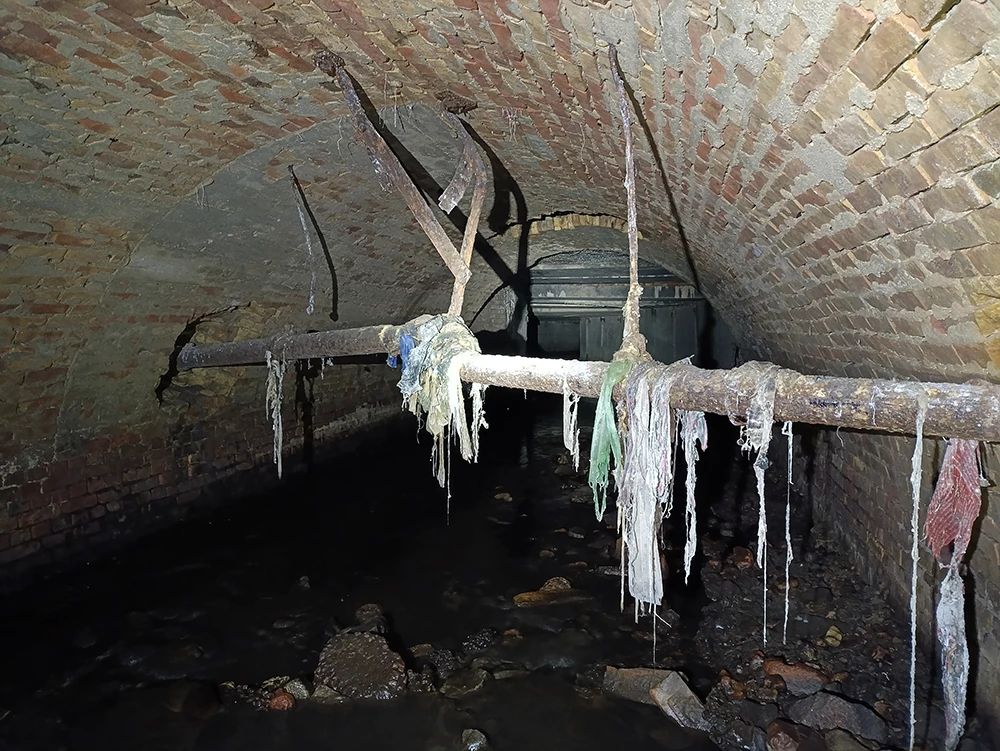
14. An astonishing engineering solution for laying a pipe, secured in a manner that is unclear, has an inexplicable bend in the middle
15. About the danger of storm drains: during rainfall, the flow is so strong that it can easily carry large stones, brick and concrete debris. Added to this is the lack of exits from this drain, with most manholes either closed or on the roadway
16. Another underground bridge, located inside the neighborhood, under building 11 on Polya Avenue, presumably from the early 20th century
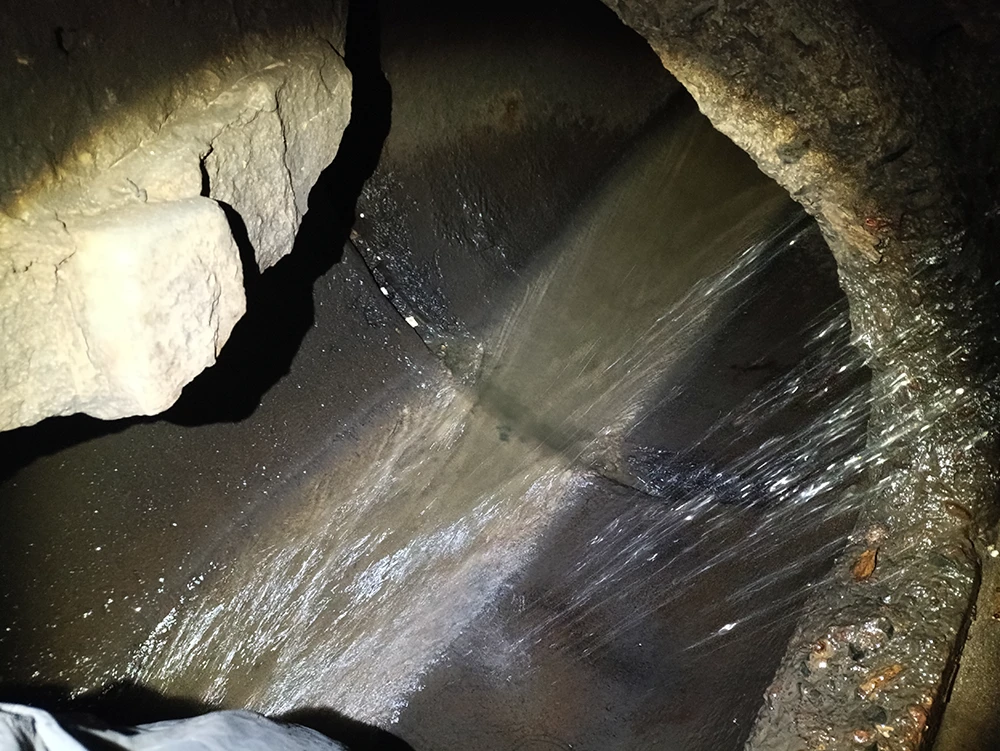
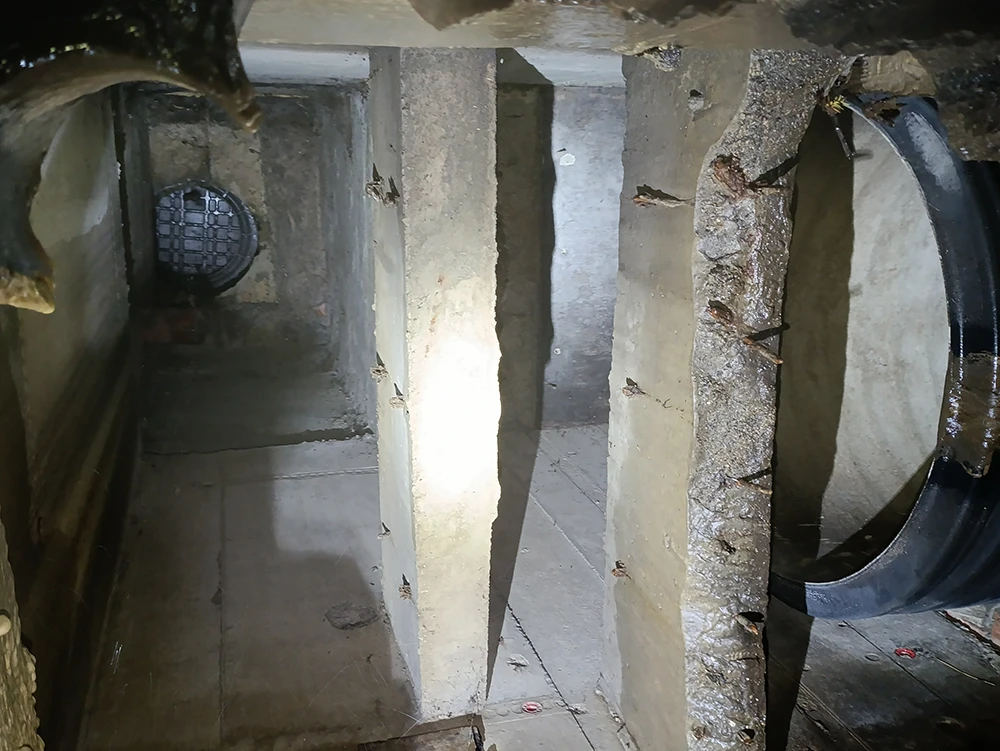
19. A 1.5-meter diameter cut-in and a water chamber, necessary to prevent falling water from damaging the bottom of the collector
20. We approach Lesya Ukrainka Avenue, a section dating back to the late 19th century
21. Branches from the collector under Lesya Ukrainka Avenue
22. A 20-meter-long branch ending in a dead end with a meter-long pipe. After walking a short distance along the pipe, you can reach a hatch, but it is not advisable to open it, as it is located on a busy roadway
23. This photo shows a small brick bridge, which was located at the end of the branch line. Unfortunately, the bridge has not survived to this day
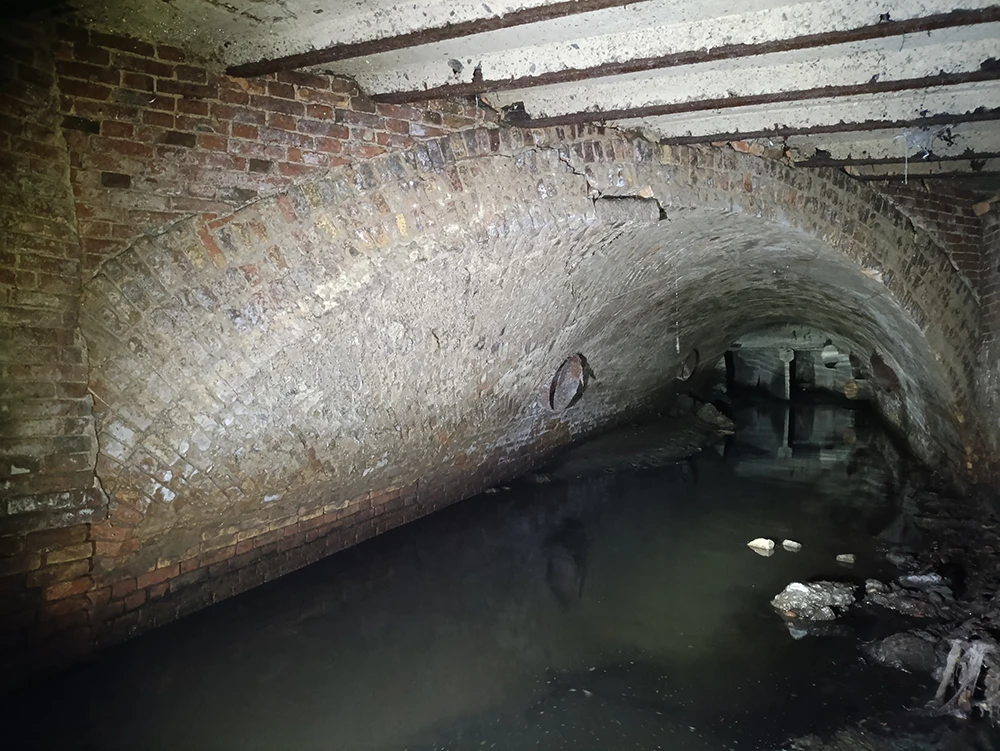
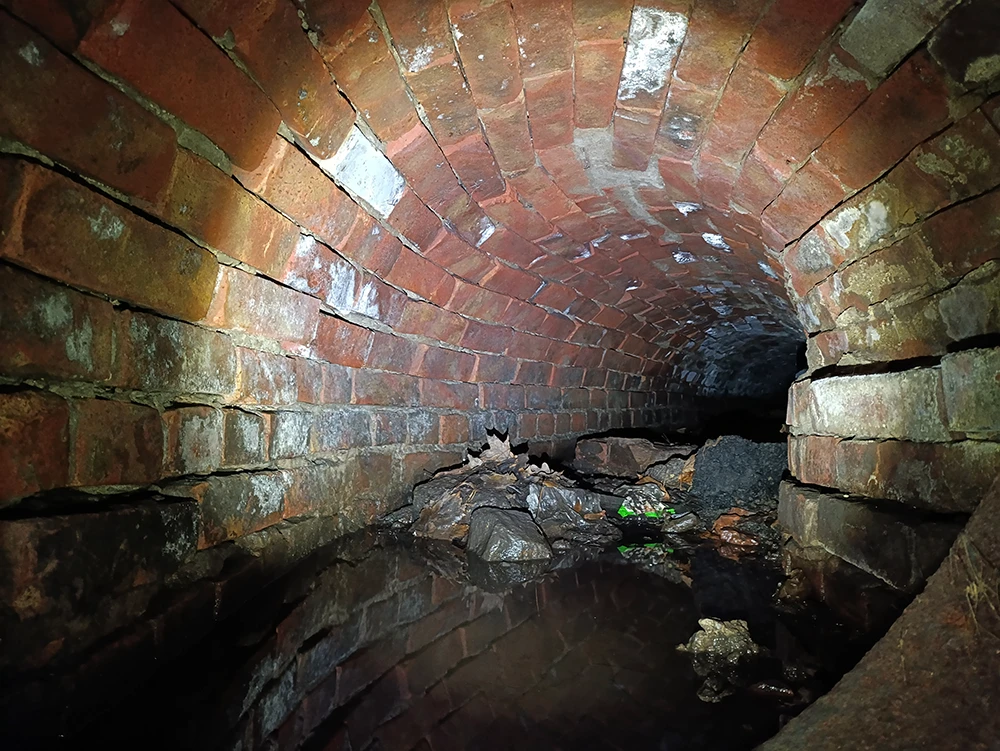
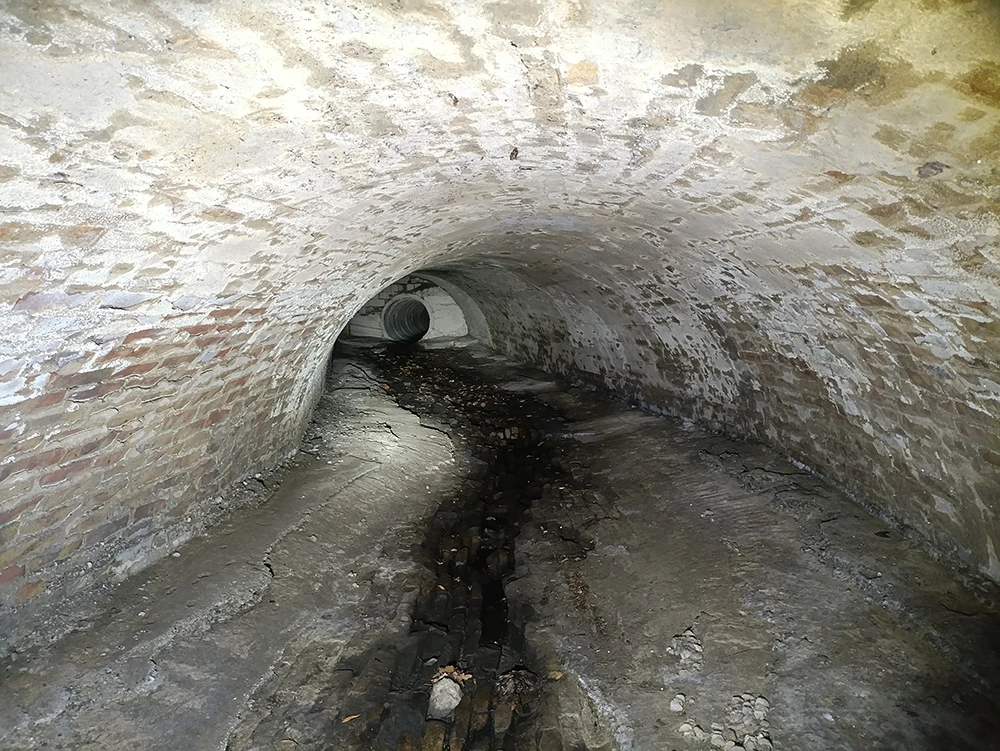
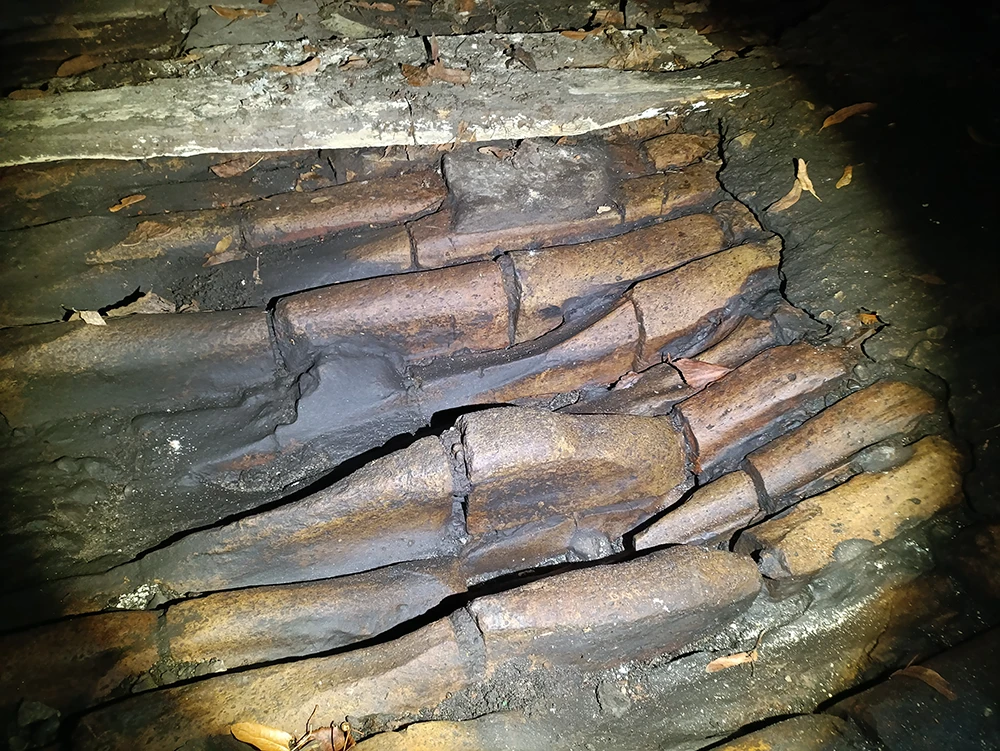
24. A century of brick wear and tear
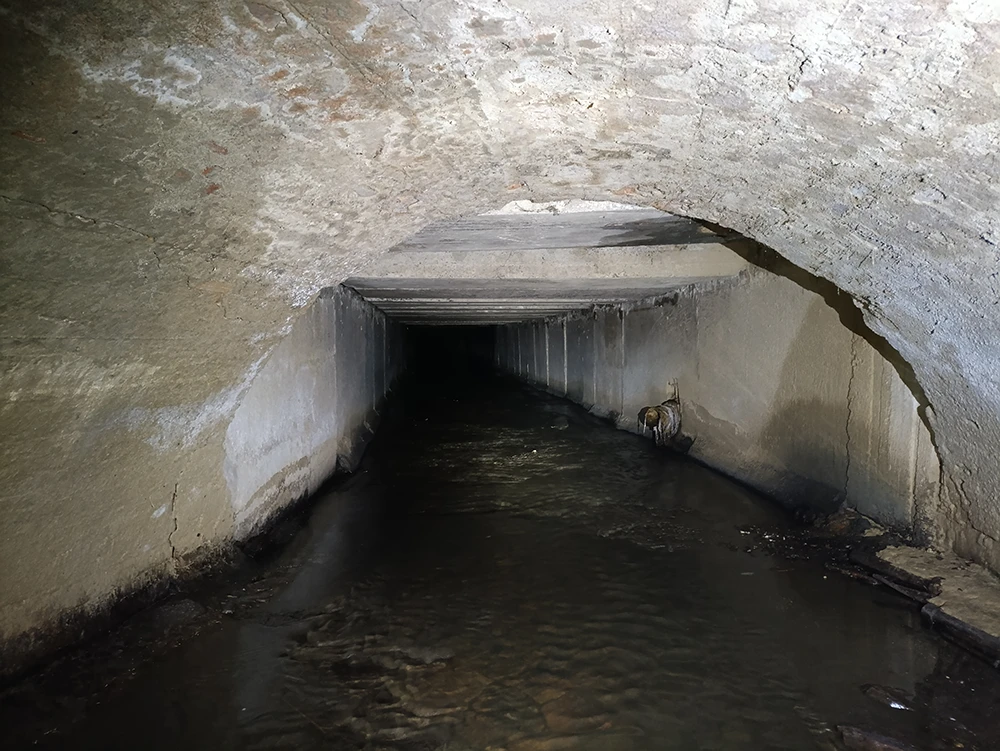
25. The old collector ended, and a boring concrete box measuring 1.7 x 3.0 meters began
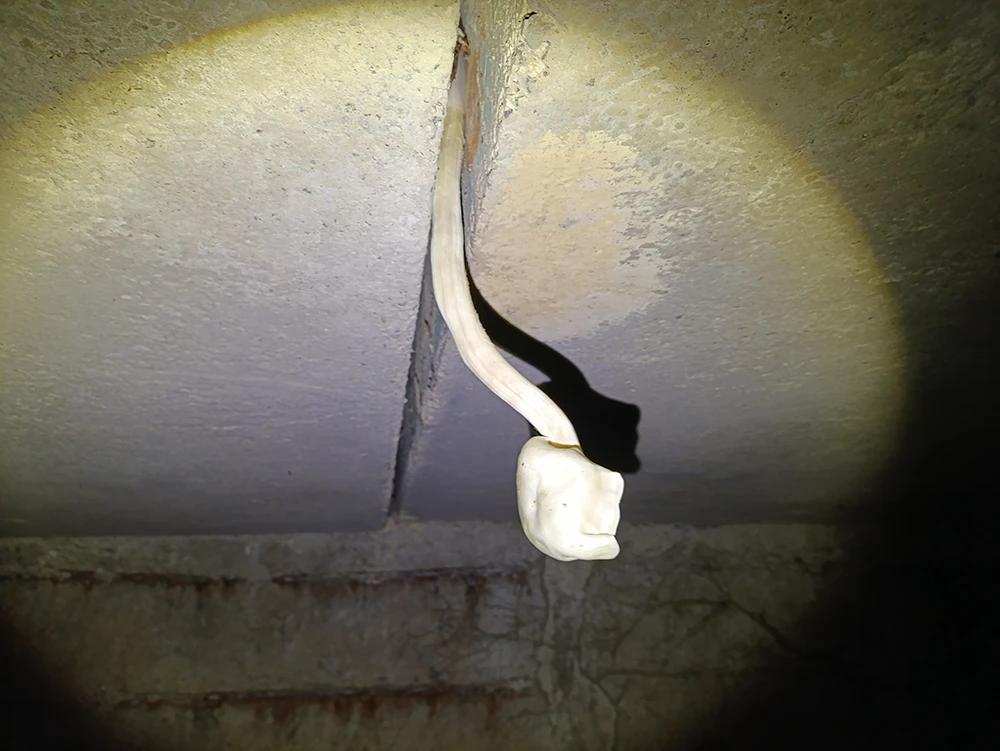
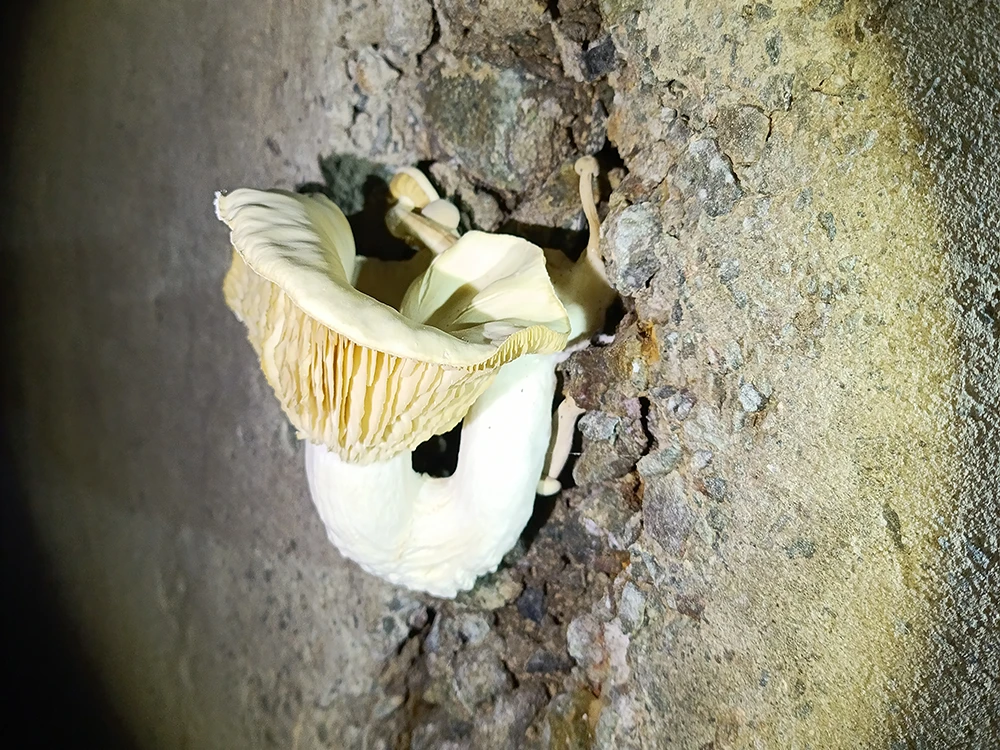
26. Another mushroom, a search by image revealed that it is “Pleurotus levis"
27. The former ditch, on the left, the brick wall was replaced with concrete blocks, a little further on, and the right wall was changed
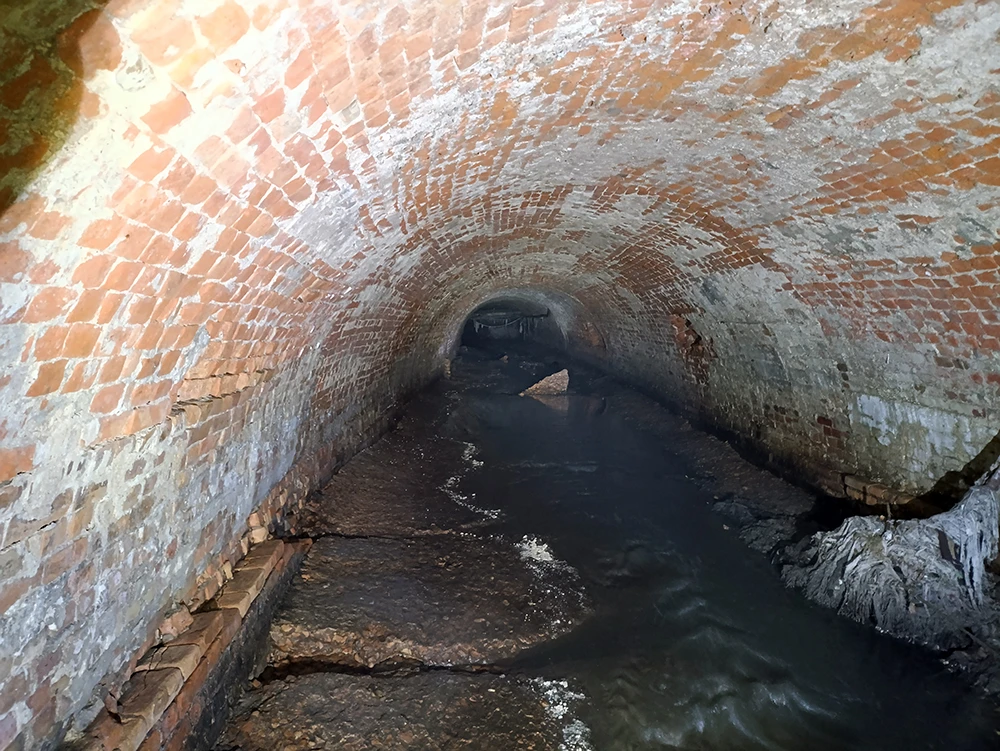
28. We are approaching Voskresenskaya Street, one of the oldest sections of the collector
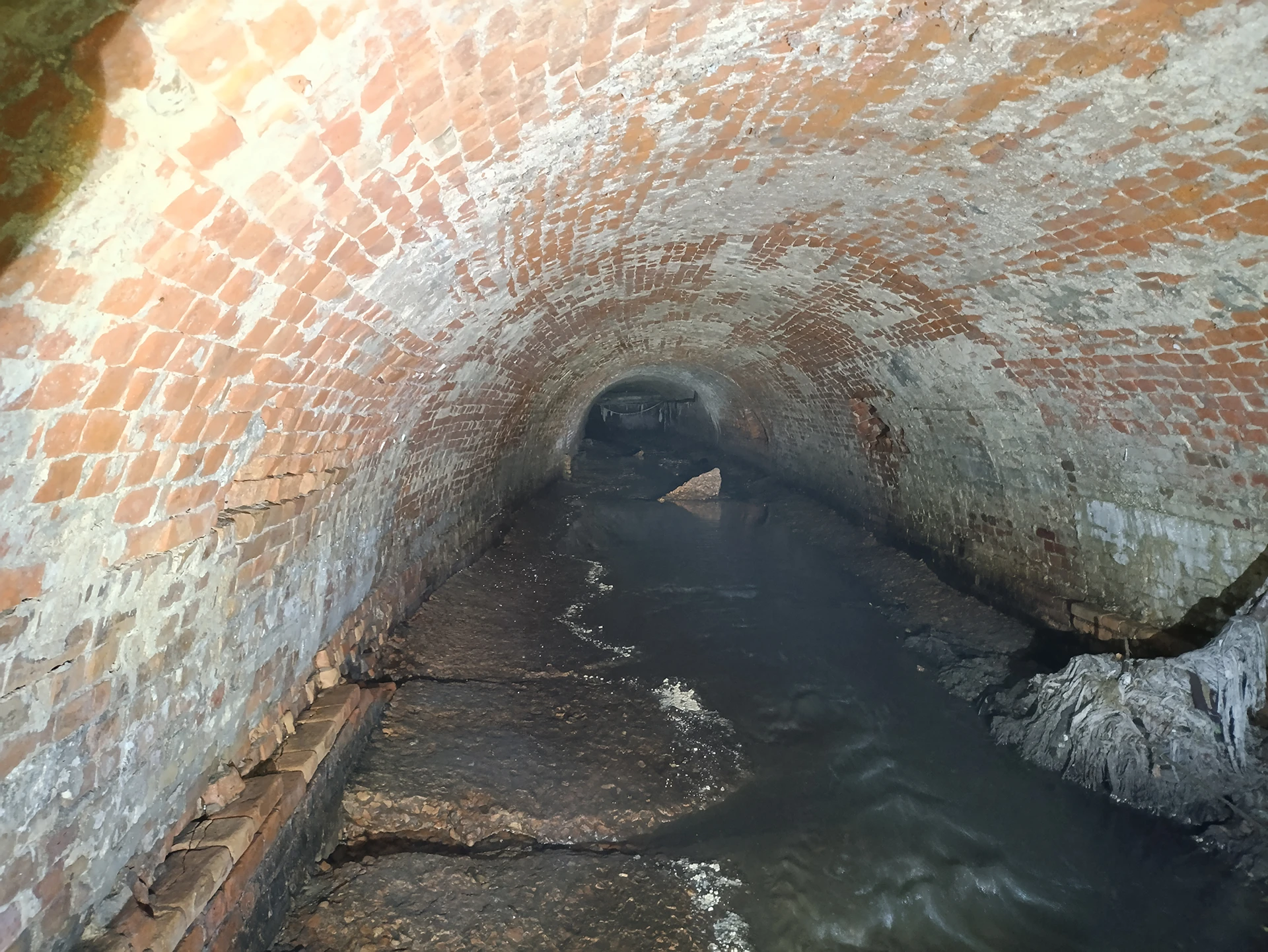
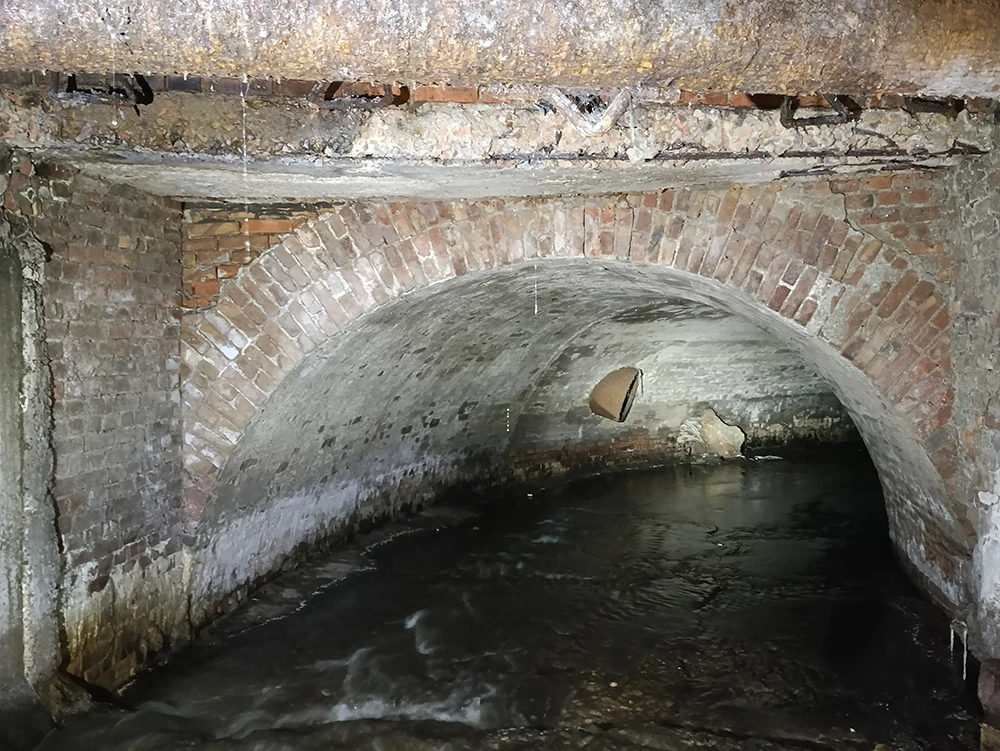
29. Pod Voskresenskaya. The bright color of the bricks indicates that this is a very old section
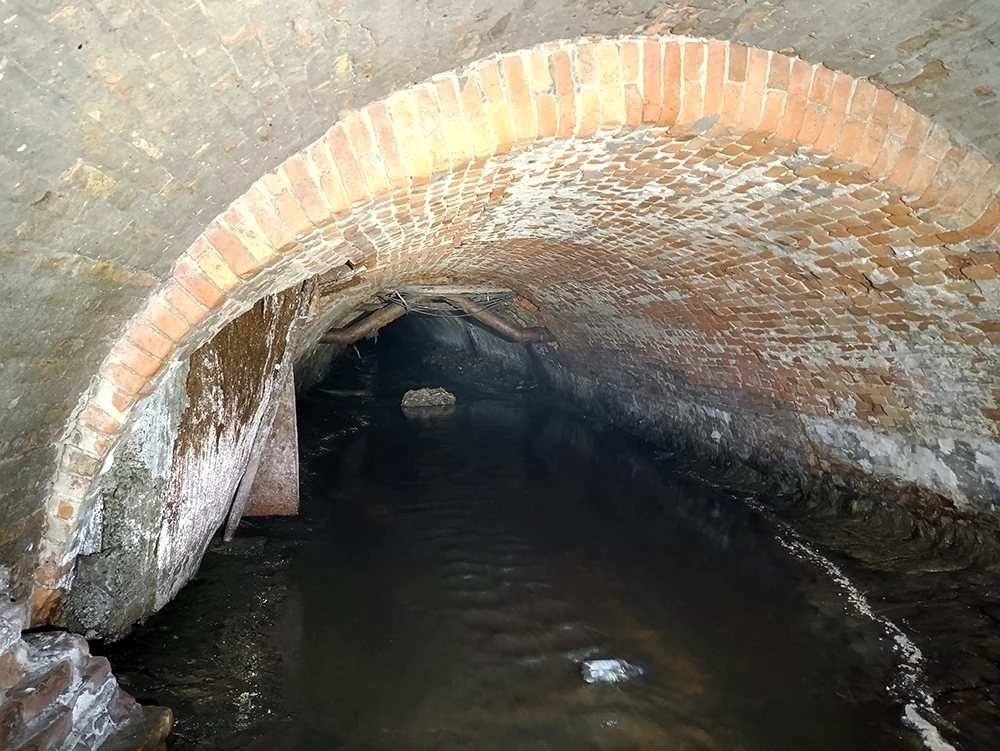
30. The underground bridge on Yavornytskyi Avenue is about 150 years old. A little further on, you can see a curved pipe, which broke a year ago, preventing us from going any further
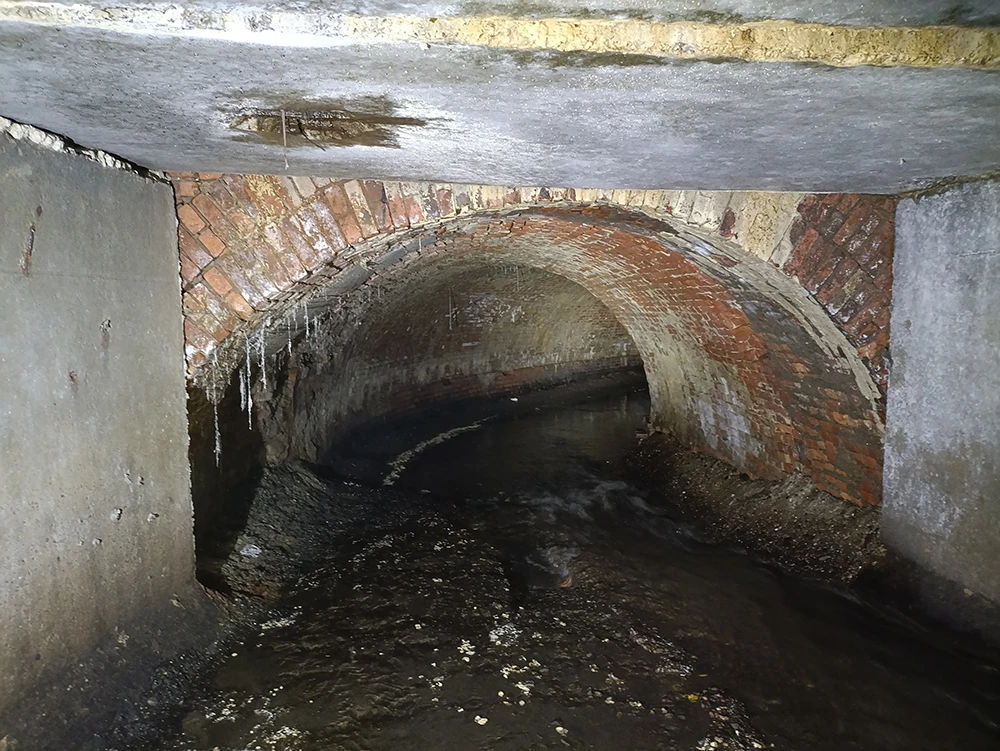
31. Under Voskresenskaya Street, the end of the brick collector, the beginning of concrete duplicates built in the 1950s. The third duplicate was recently blocked off, and new connections may be added
Result: we covered 4.6 kilometers in five and a half hours. The most interesting section of the collector begins under Ulyanovskaya Street and ends under Voskresenskaya Street.
I hope they will return to this system, it is as interesting as Zhabokryach and has the same historical significance for our city.