"Strela" Secondary Wall Clocks: Industrial-Scale Precision
The “Strela” (Arrow) clock is a classic example of Soviet industrial timekeeping, once an essential fixture in large enterprises, including the Kyiv “Saturn” plant. Unlike domestic clocks, these devices were designed to operate as part of a centralized Unified Time System.
Why Are These Clocks Called “Secondary”?
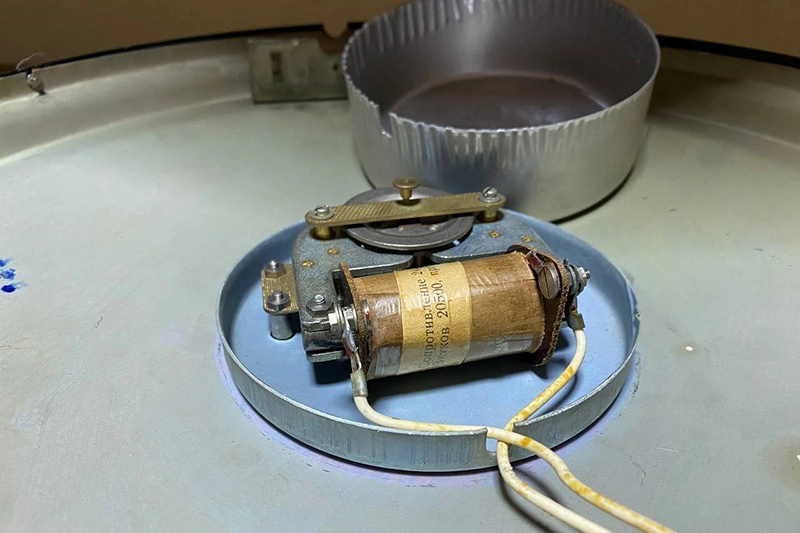
The defining feature of the “Strela” model is the absence of its own autonomous movement (such as a quartz crystal or mainspring). These clocks are known as secondary (or slave) clocks because they only function when connected to a primary (master) clock.
The system operates on the following principle:
- A primary clock—a high-precision instrument located in a dedicated facility at the plant—sent an electrical pulse of alternating polarity every minute through a specialized two-wire network.
- The secondary clocks, distributed throughout workshops and hallways, received this pulse.
- Under the influence of the current, an electromagnet inside the clock advanced the minute hand exactly one position.
This setup ensured perfectly synchronized time across the entire factory territory—from the entrance gates to the most remote workshop—which was critical for maintaining labor discipline and technical schedules.
Design and Construction
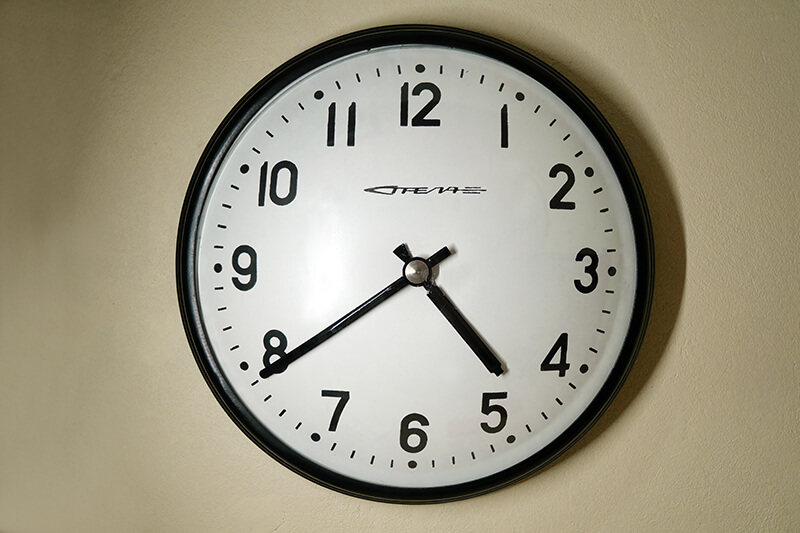
The model shown in the photo features a functional industrial design:
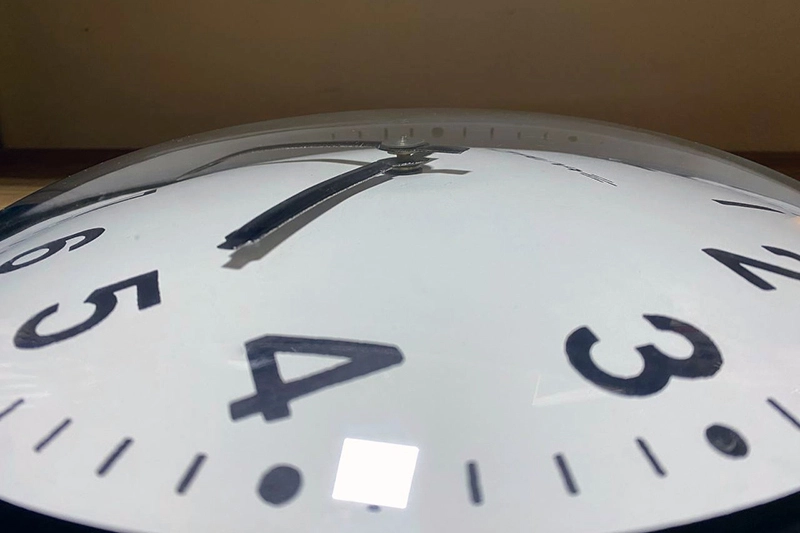
- Case: Circular, typically made of metal or impact-resistant black plastic.
- Dial: White, featuring clear Arabic numerals and the “Strela” logo at the top.
- No Second Hand: Since the pulse is only received once per minute, a second hand is not included in classic secondary clocks.
Brief History
The “Strela” brand belonged to the “Promsvyaz” production association. These time systems began to be widely implemented in Soviet industrial plants during the 1950s and 60s. The clocks were manufactured at several locations (including the Leningrad Electric Clock Factory) to meet the demands of the USSR’s growing industrial sector.
At the “Saturn” plant in Kyiv, which specialized in complex radio-electronics, these clocks were vital. They did more than just track shifts; they ensured the precise coordination of all departments within the enterprise.
Operation Today
Today, “Strela” clocks are highly valued by collectors and fans of industrial aesthetics. However, to make them work in a home environment, simply inserting a battery is not enough. Because they require a one-minute pulse of 24V (occasionally 12V or 60V), modern enthusiasts use specialized electronic pulse-imitator modules to bring them back to life.