The “KD-6” Telephone Concentrator — An Executive Phone from the Soviet Era
Among the exhibits in my museum, the KD-6 telephone switchboard holds a special place—it is one of the most famous devices that, during the Soviet era, could be found in the offices of directors at factories, large enterprises, military units, and government agencies. It was this very model that was given to me as a gift by employees of the Saturn plant in Kyiv, thanks to which it became part of my collection.
What is KD-6
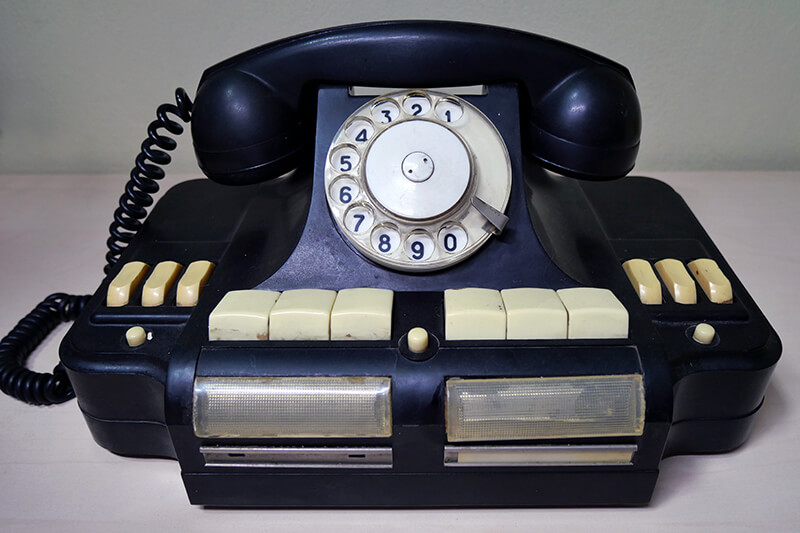
KD-6 stands for “Director’s Concentrator”. It is a specialized multi-line telephone developed in the early 1960s for business executives. The device’s main purpose was to combine multiple telephone lines into a single unit so that a director could quickly switch between internal and long-distance calls without using a separate switchboard. The unit allowed for connecting up to six telephone lines and even facilitating conference calls between subscribers.
By today’s standards, such capabilities seem commonplace, but in the 1960s, this was a rather sophisticated solution that greatly simplified the work of executives at large organizations.
Usage
KD-6 telephones were installed in the offices of directors at industrial enterprises, factories, research institutes, government agencies, and military organizations. Thanks to their ability to handle multiple telephone lines simultaneously, managers could quickly contact various departments within the enterprise or conduct several phone calls at the same time.
This type of phone was often used in conjunction with a KS-6 unit, which was kept by the secretary. This system made it possible to efficiently route incoming calls and organize internal communication within the company.
Design of the KD-6
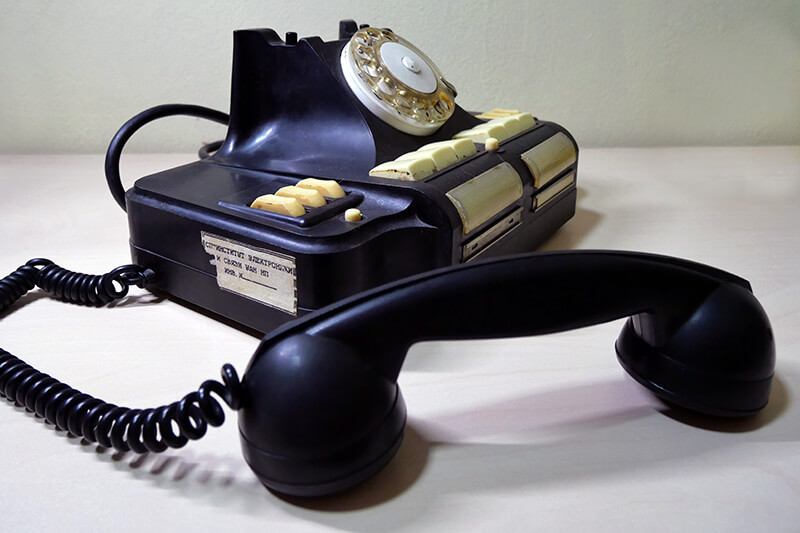
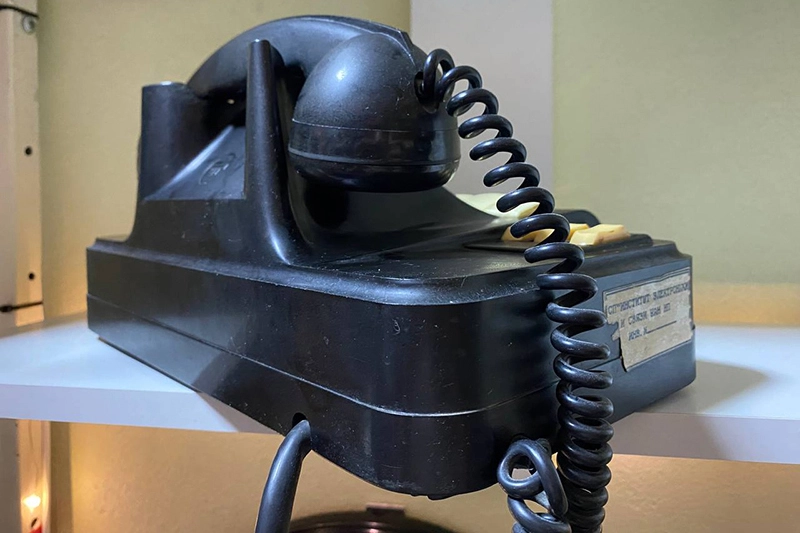
The KD-6’s casing is made of durable bakelite—a material that was widely used in the manufacture of telephone equipment in the mid-20th century. As a result, the device is very heavy and reliable. It weighs about 4 kilograms and measures approximately 315 × 192 × 162 mm.
The front panel features a classic rotary dial, as well as a row of buttons and switches for selecting phone lines. It is these additional features that immediately set the KD-6 apart from standard Soviet telephones.
Interesting Facts
Several models were produced in the same building at the same time:
- KD-6 — Director’s Switchboard;
- KS-6 — Secretary’s Switchboard;
- TKM — Local Telephone Set.
Although they look very similar, they were designed for different purposes and could function as a unified enterprise communications system. Despite their advanced age, many KD-6 units have survived to this day. They are popular among collectors of Soviet technology, telecommunications museums, and enthusiasts of industrial history.