Individual First Aid Kit AI-11: Design and Purpose
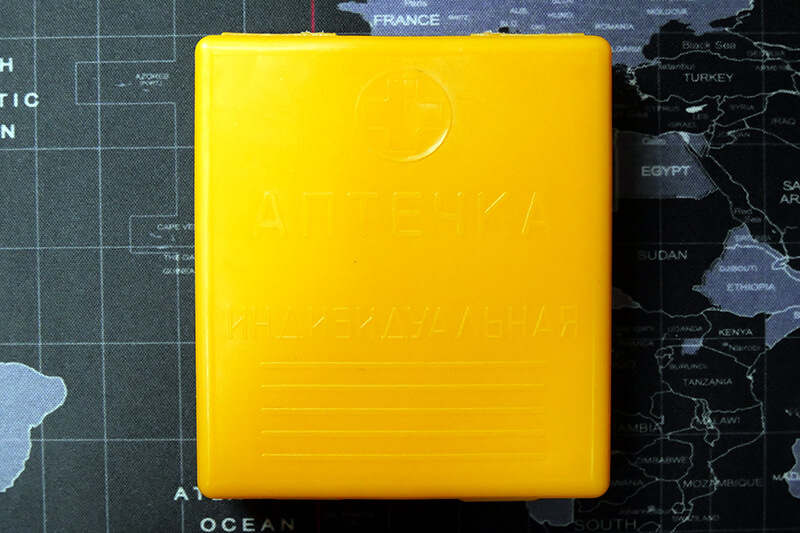
The AI-11 (Individual First Aid Kit) is a standard medical kit developed in the USSR to protect the civilian population and personnel of civil defense units. Its primary objective was to provide emergency prevention and aid in the event of the use of weapons of mass destruction or major industrial disasters.
What Was the Purpose of This Kit?
The kit was designed as a survival tool for the first few hours following an emergency. The medication selection was curated to allow an individual to independently minimize the effects of radiation, toxic agents, and infections before professional medical assistance could be reached.
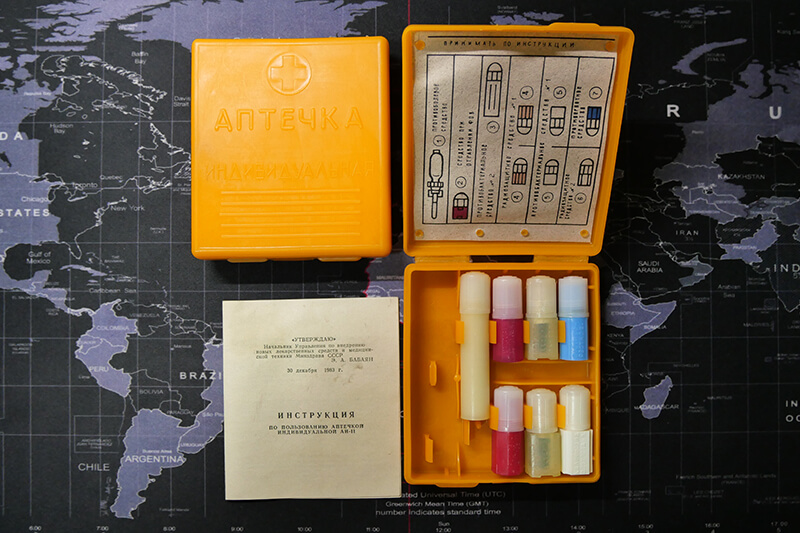
The kit was produced in a compact, brightly colored plastic case, making it easy to locate in a bag or pocket. A diagrammatic manual is attached to the inside of the lid to help the user navigate the medications even under extreme stress.
Composition and Functional Use of Medications – instructions
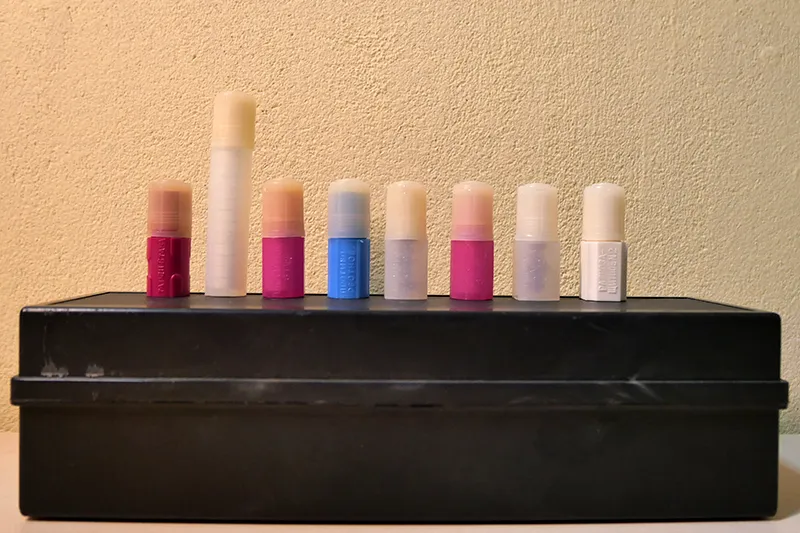
The medical supplies in the AI-11 are organized into specific slots. The shapes and colors of the canisters vary so they can be identified by touch or in low-light conditions.
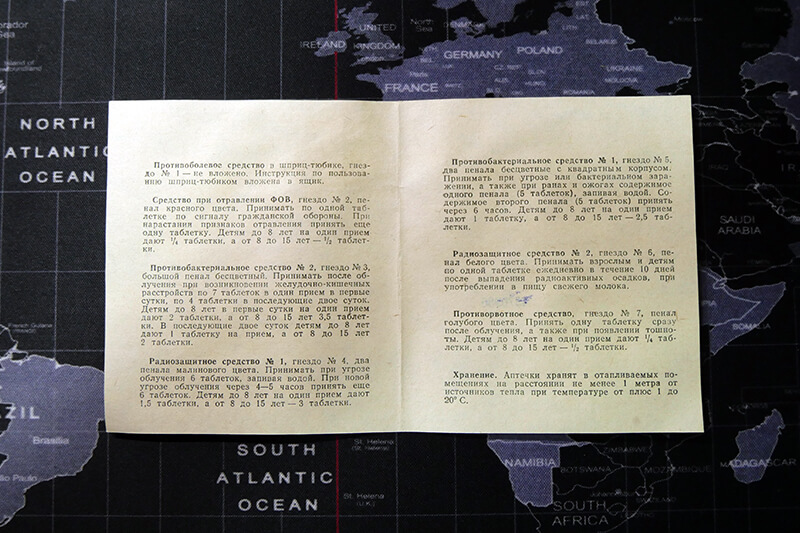
- Painkiller in a syringe-tube, socket No. 1 — not included. Instructions for using the syringe-tube are included in the box.
- Antidote for OP (Organophosphorus) poisoning, socket No. 2, red case. Take one tablet upon a Civil Defense signal. If poisoning symptoms increase, take one more tablet. For children under 8 years old, give 1/4 tablet per dose; from 8 to 15 years old, give 1/2 tablet.
- Antibacterial agent No. 2, socket No. 3, large colorless case. To be taken after radiation exposure if gastrointestinal disorders occur: 7 tablets in a single dose during the first 24 hours, then 4 tablets daily for the following two days. For children under 8, give 2 tablets on the first day; from 8 to 15 years old, give 3.5 tablets. For the next two days, children under 8 receive 1 tablet per dose, and those 8 to 15 receive 2 tablets.
- Radioprotective agent No. 1, socket No. 4, two crimson cases. Take 6 tablets with water when there is a threat of radiation exposure. If a new threat arises after 4–5 hours, take another 6 tablets. For children under 8, give 1.5 tablets per dose; from 8 to 15 years old, give 3 tablets.
- Antibacterial agent No. 1, socket No. 5, two colorless square cases. Take in case of threat or bacterial contamination, as well as for wounds and burns: the contents of one case (5 tablets) with water. Take the contents of the second case (5 tablets) after 6 hours. For children under 8, give 1 tablet per dose; from 8 to 15 years old, give 2.5 tablets.
- Radioprotective agent No. 2, socket No. 6, white case. Adults and children should take one tablet daily for 10 days after radioactive fallout occurs, especially when consuming fresh milk.
- Anti-emetic (Anti-vomiting) agent, socket No. 7, blue case. Take one tablet immediately after radiation exposure, or if nausea appears. For children under 8, give 1/4 tablet per dose; from 8 to 15 years old, give 1/2 tablet.
- Storage. First-aid kits should be stored in heated rooms at least 1 meter away from heat sources, at temperatures ranging from +1 to 20° C.
Storage and Production Characteristics
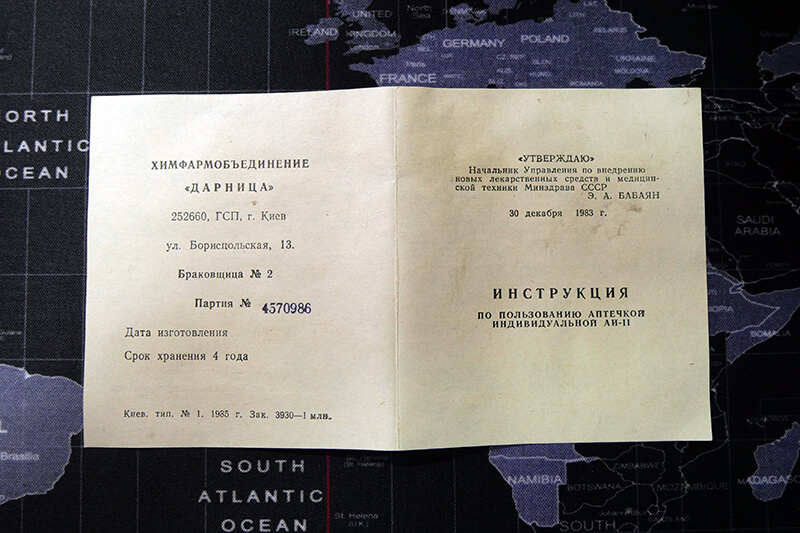
The images show a specimen from the Kiev-based association “Darnitsa,” produced in 1985 (with the manual approved in 1983). The massive print run of the manual—1 million copies—highlights the large-scale production of these kits.The shelf life of the first aid kit was 4 years. After this period, the medications lost their effectiveness and were supposed to be replaced. Today, these kits are of historical value as a visual aid for the civil defense methods of the last century.